
 Skip to content
9 sessions + 1 as a gift
Rotator cuff syndrome — is a complex of pathological changes in the tendons and muscles of the shoulder joint, which are responsible for the stability and mobility of the shoulder. The disease often develops gradually and without timely treatment can lead to chronic pain and limitation of movement.
repetitive stress on the shoulder (sports, physical work)
prolonged lifting of the arm or overhead work
age-related degenerative changes in tendons
violation of the biomechanics of the shoulder joint
consequences of injuries, falls, micro-tears
weakness of the stabilizing muscles of the shoulder and scapula
shoulder pain, especially when raising or lowering your arm
pain at night or when lying on the affected side
decreased strength in the hand
limitation of range of motion
discomfort when dressing, combing, or working on the head
Our approach is aimed at restoring shoulder joint function and eliminating the causes of overload:
Apparatus physiotherapy — reduces inflammation, pain and promotes tendon repair
Therapeutic massage — improves blood circulation, relieves muscle tension
Physical therapy (physical therapy) — restores shoulder stability, strength and movement control
Working with the shoulder blade and posture — normalizes the biomechanics of the shoulder complex
Individual rehabilitation program — selected taking into account the cause and stage of the process
 Treatment result — pain reduction, restoration of shoulder mobility, return to daily activities without restrictions.
Wellness centers
Patients were helped
Specialists
Years of experience
Our team consists of experienced rehabilitation specialists, physiotherapists, and massage therapists who help people restore their health and return to an active life every day.
We combine modern techniques, an individual approach, and sincere care for each patient.

Chief Rehabilitation Specialist

Chief physiotherapist

Orthopedic traumatologist
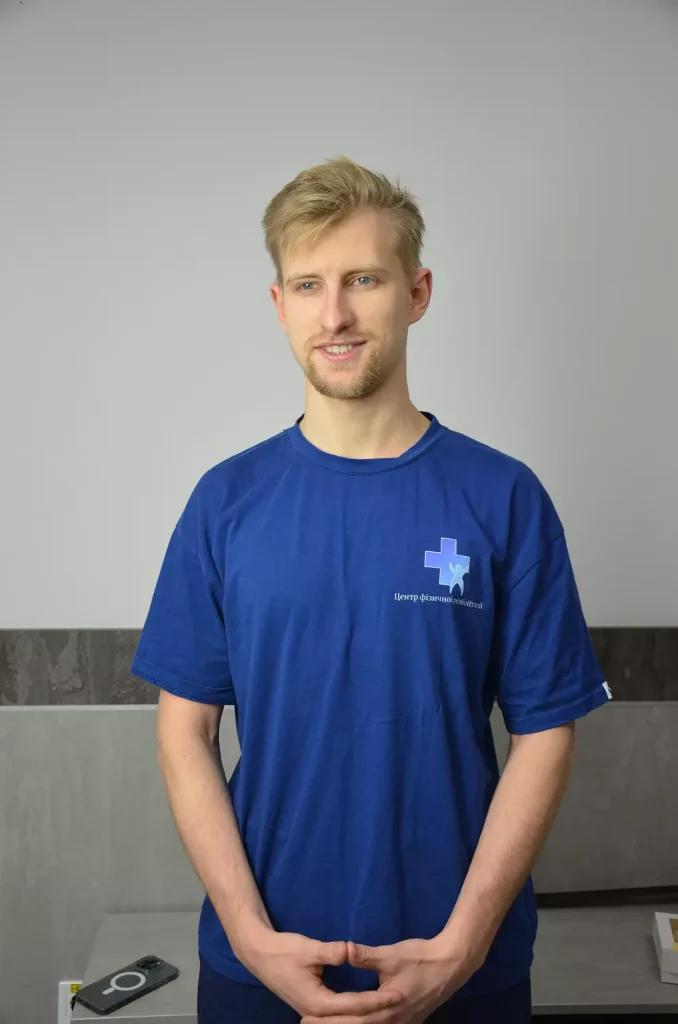
Chief rehabilitation specialist of physical therapy

Masseur
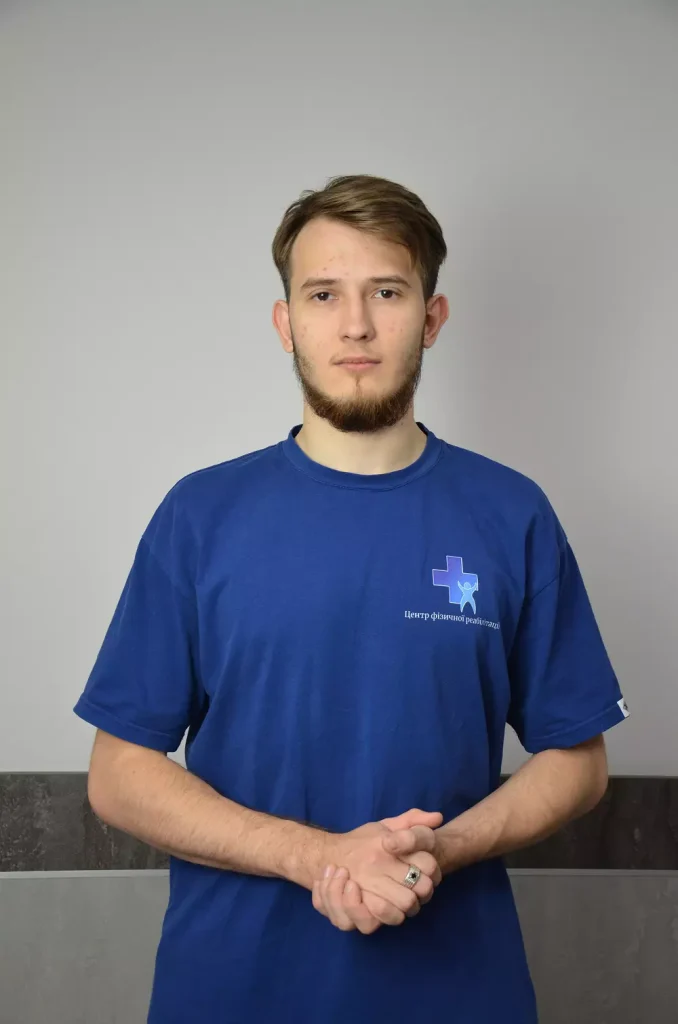
Masseur

Masseur

Masseur
We are grateful to everyone who has entrusted their health to us.
Your feedback is the best confirmation of the results of our work.
Share your impressions - they inspire us to become even better every day.
Leave your contacts — our specialist will contact you within 10–15 minutes to help you choose a service and answer all your questions.
We are always open for communication and ready to help you.
Call or email us to schedule a consultation or get detailed information.
Our experts will suggest the best solution for you.
Treatment of shoulder pain at KINEZIUM includes assessment of shoulder joint mobility, strength, pain, scapular stability, arm function and loads that provoke symptoms. The shoulder is not just a joint, but a complex of work of the humerus, scapula, clavicle, rotator cuff muscles and thoracic spine. Therefore, the program may include amplitude exercises, rotator cuff strengthening, scapular control, physiotherapy as indicated and home recommendations. The goal is to restore safe arm lifting, everyday movements and load tolerance without increasing pain.
Help may be needed for pain when lifting the arm, weakness, night pain, limited movement, discomfort after exertion or after an injury. Rotator cuff syndrome is often manifested by difficulty raising the arm above the head, moving it to the side, combing your hair, buttoning clothes, or sleeping on your side. If the pain persists, progresses, or is accompanied by sudden weakness, a specialist evaluation is necessary.
Symptom or situation | What to assess |
Pain when raising the arm | Amplitude, strength, scapular control and tendon response |
Night pain | Possible tissue irritation or severe inflammation |
Arm weakness | Significant tendon damage or nerve symptoms must be ruled out. |
Pain after injury | It is important to assess the risk of rupture or instability |
Restrictions on movement | It is necessary to distinguish between pain, stiffness and compensatory movements. |
Discomfort after overhead work | Load correction and muscle strengthening are often required. |
A specialist evaluation is needed for sudden pain, arm weakness, inability to raise the arm, pain at rest, night pain, swelling, trauma, or progressive deterioration of movement. If the arm has suddenly lost strength after a fall or jerky movement, do not try to “work out” the shoulder yourself. Also, attention is needed for numbness, tingling, pain that goes from the neck to the arm, or impaired sensitivity in the fingers. In such cases, it is important to distinguish the shoulder problem from the cervical or neurological component.
Shoulder rehabilitation helps restore range of motion, rotator cuff strength, scapular control, stability, everyday activities, and safe weight-bearing. When shoulder pain occurs, a person often begins to compensate by lifting their arm: pulling their shoulder toward their ear, flexing their torso, or avoiding movement. Over time, this can lead to pain and weakness. The program gradually restores proper motion, strengthens muscles, and teaches them how to manage stress during work, sports, or everyday activities.
The initial assessment for shoulder pain includes an analysis of movement, strength, pain, functional tests, posture, scapula position, loading, injuries, and previous examinations. The specialist specifies when the pain occurs: when lifting, lowering, rotating, at rest, at night, or after a specific task. The neck, chest, and nerve symptoms are separately assessed for numbness or radiating pain. After the assessment, it is determined whether exercises can be started, or whether a doctor's consultation or additional diagnostics is needed.
Rotator cuff rehabilitation focuses more specifically on the tendons and muscles that stabilize the humerus in the joint. General shoulder work can include mobility, posture, scapula, chest, and home activities, but with rotator cuff, targeted strengthening, pain control, and progression are especially important. Too early or aggressive loading can aggravate tendon irritation.
Criterion | Rotator cuff | General shoulder work |
Focus | Tendons, shoulder stabilization, rotation control | Amplitude, posture, scapula, hand function |
Exercises | Dosed strengthening of external and internal rotation | Mobility, strength, coordination, everyday movements |
Risks | Tendon overload, increased night pain | Compensations, stiffness, weakness of the shoulder girdle |
Tempo | Cautious and gradual | Depends on the cause of the pain and limitations |
Goal | Stable shoulder without pain when raising the arm | Full hand function in everyday life and at work |
A program for shoulder pain may include range-of-motion exercises, rotator cuff strengthening, scapular control, shoulder stabilization, physical therapy as indicated, and home recommendations. Early on, exercises are often performed with light loads and within a pain-free range. Elastic bands, scapular exercises, functional movements, and supervised return to overhead work are then added. Massage or gentle techniques may help reduce tension but are not a substitute for actively regaining strength and control.
Before treating a shoulder, consider acute injury, sudden weakness, suspected tendon rupture, significant pain at rest, night pain, postoperative restrictions, swelling, redness, or risk of overuse. If a person is unable to lift their arm after a fall or jerky movement or their strength has decreased dramatically, medical evaluation is necessary first. Caution is also needed with numbness, pain radiating from the neck, or progressive deterioration of arm function.
AAOS OrthoInfo describes typical symptoms of a rotator cuff tear: pain at rest and at night, pain when raising or lowering the arm, weakness, and crepitus when moving the shoulder: https://orthoinfo.aaos.org/en/diseases–conditions/rotator-cuff-tears/. MedlinePlus notes that a rotator cuff tear can occur acutely after a fall or sudden movement, or gradually due to chronic irritation or impingement: https://medlineplus.gov/ency/article/000438.htm. The MedlinePlus article on rotator cuff exercises emphasizes that a key part of recovery is exercises to strengthen and flex the muscles and tendons of the shoulder joint: https://medlineplus.gov/ency/patientinstructions/000357.htm. A review of clinical examination of the rotator cuff in PubMed Central notes that pain, weakness, and loss of range of motion are not unique to a tear, so a structured assessment is needed: https://pmc.ncbi.nlm.nih.gov/articles/PMC3826176/. Therefore, shoulder loading should begin after risk assessment, not due to pain and force.
To schedule an evaluation of shoulder pain at KINEZIUM, you should tell us when the pain started, whether there was an injury, what movements are limited, whether there is night pain, weakness, numbness, or previous examinations. During the initial evaluation, the specialist will check the amplitude, strength, function of the shoulder, the work of the scapula, contraindications and possible causes of the symptoms. After that, a recovery program is selected: exercises, physiotherapy or other methods according to indications. If there is a suspicion of a rupture or acute injury, the patient may be recommended to consult a doctor.
Leave your contacts — our specialist will contact you within 10–15 minutes to help you choose a service and answer all your questions.