Flatfoot — is a deformity of the foot, in which its longitudinal or transverse arch is reduced or completely disappears. The foot loses its shock-absorbing function, which over time leads to overload of the joints, muscles, and spine.
weakness of the muscles and ligaments of the foot
prolonged standing
improper or uncomfortable shoes
overweight
foot and ankle injuries
hereditary predisposition
rapid fatigue and pain in the feet
pain in the shins, knees, lower back
swelling of the legs at the end of the day
change in gait, wear of the inside of the shoe
leg muscle cramps
Our approach is aimed at restoring foot function and proper load distribution:
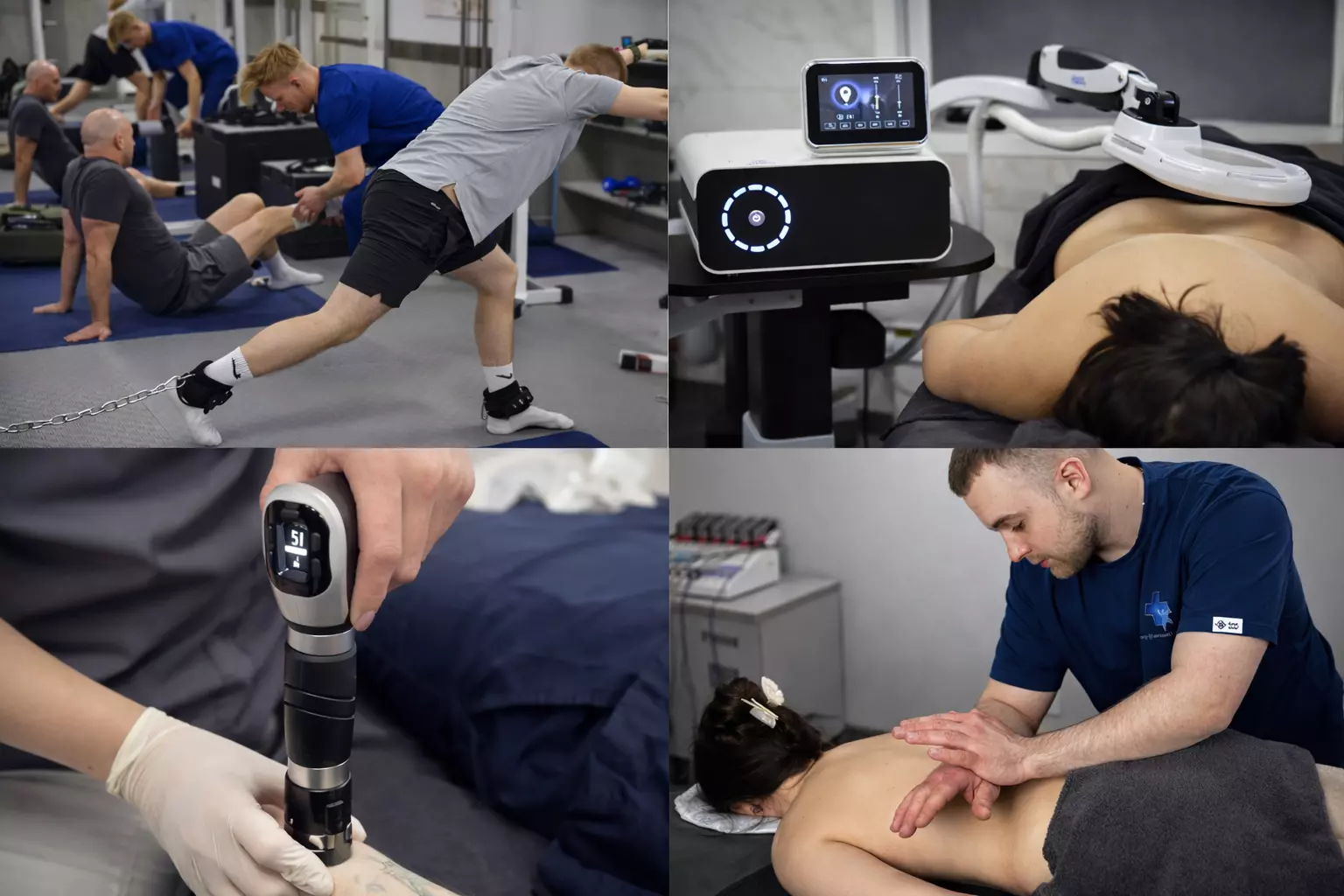
Physical therapy (physical therapy) — strengthens the muscles of the foot and lower leg, develops correct motor skills
Apparatus physiotherapy — improves blood circulation and reduces pain syndrome
Therapeutic foot and calf massage — relieves tension and improves tissue trophism
Gait and posture correction — reduces the load on the knee and hip joints
Individual rehabilitation program — taking into account age, degree of flat feet and activity level
💡 Rehabilitation result — reducing pain and fatigue in the legs, improving gait, preventing complications from the joints and spine.
📌 Importantly: Flat feet are not just a foot problem. Without correction, they can lead to knee, pelvic, and back pain.
wellness centers
patients were helped
specialists
years of experience

Leave your contacts — our specialist will contact you within 10–15 minutes to help you choose a service and answer all your questions.
KINEZIUM flatfoot exercise therapy includes an assessment of the foot, gait, pain, muscle strength, ankle mobility, and how the person distributes weight during stance. Flatfoot can affect not only the foot, but also the lower legs, knees, hips, and back, especially with prolonged walking or standing. The program usually includes exercises for the muscles of the foot and lower leg, balance training, stance control, and load recommendations. Shoes or insoles are also discussed if necessary, but they do not replace active muscle work.
Flatfoot exercises may be necessary for people who experience foot pain, rapid fatigue when walking, foot rolling inward, discomfort in the calves, knees or back. Often the problem manifests itself after prolonged standing, running, walking in uncomfortable shoes or increased physical activity. Evaluation is also necessary when the gait changes or the shoe wears out quickly on one side.
Sign | Why should you contact us? |
Foot pain | It is necessary to assess resistance, mobility and load |
Rapid fatigue when walking | May be associated with weakness of the foot and lower leg muscles |
Foot drop | It is important to check support control and balance |
Discomfort in the knees | Foot position can affect knee mechanics |
Back pain after walking | The entire motor chain needs to be assessed, not just the foot. |
Uneven shoe wear | May indicate a change in gait or stance |
A specialist assessment is needed if there is pain when walking, rapid foot fatigue, a change in gait, instability, discomfort after exertion, or noticeable wear and tear on one side of the shoe. It is also worth seeking help if the pain spreads to the shin, knee, hip, or lower back. In children and adolescents, it is important to assess not only the shape of the foot, but also its function: whether there is pain, fatigue, activity limitations, or gait disturbances. Independent selection of exercises without an assessment may be ineffective, because the causes of overload are different.
Foot exercise therapy helps strengthen the muscles of the foot and lower leg, improve foot control, balance, gait, and load tolerance. Exercises can teach the foot to work more actively when standing, walking, lifting on toes, or carrying weight. Additionally, foot work is often combined with exercises for the knee, hip, and trunk, because walking is not an isolated function of one area. The main thing is to perform the exercises regularly and gradually, without a sharp increase in pain.
The initial assessment of the foot begins with an analysis of complaints: where it hurts, when fatigue appears, what shoes provoke discomfort, is there pain in the knees, shins or back. Next, the specialist examines the foot in a standing position, assesses gait, balance, muscle strength, ankle joint mobility and support control. If necessary, load symmetry, toe function, ability to hold the arch of the foot and stability during functional movements are checked. After that, exercises, load recommendations and a home program are selected.
Exercise therapy for flat feet involves active muscle work, support control, balance, gait training, and gradual development of better foot function. Foot massage can help reduce tension, improve the feeling of lightness, and prepare tissues for exercise, but it does not teach the muscles to hold the load stably. Therefore, these methods can complement each other, but not replace each other.
Criterion | Exercise therapy for flat feet | Foot massage |
Focus | Active muscle work and support control | Handmade with soft fabrics |
Patient participation | Active: exercises, balance, gait | Mostly passive |
Homework | Required for a lasting effect | Can complement the program |
Goal | Improve foot function under load | Reduce tension and subjective discomfort |
Optimal application | The main method of functional recovery | Auxiliary method according to indications |
A program for flat feet may include exercises for the short muscles of the foot, toes, lower leg, balance, support control, gait, and gradual increase in endurance. Soft tissue work, hip and knee exercises, toe-raising, weight-bearing, and gait stabilization training may also be used. Depending on the condition, a specialist may recommend shoes or insoles, especially if there is pain with prolonged use. But even high-quality insoles do not eliminate the need for active muscle work and movement control.
Before performing foot exercises, you should consider acute pain, swelling, recent trauma, inflammation, suspected fracture, severe pain with support, vascular or neurological symptoms. If the foot becomes red, hot, painful, or swelling increases rapidly, exercises should be postponed until medical evaluation. Caution is also required in diabetic neuropathy, sensory impairment, or vascular problems, where the patient may not feel the tissue overload.
Medical sources support a gradual and controlled approach. MedlinePlus describes that adults with flat feet may experience fatigue or pain in their feet after prolonged standing or exercise, while pain in children, ankle, or lower leg pain should be evaluated by a medical professional: https://medlineplus.gov/ency/article/001262.htm. AAOS OrthoInfo, in its material on progressive foot deformity, notes that pain and swelling in the tendon area require reduction of the provoking load and control of inflammation; cold can be applied after exercise, but not directly to the skin: https://orthoinfo.aaos.org/en/diseases–conditions/posterior-tibial-tendon-dysfunction/. In a study published in PubMed Central, an exercise program for painful flat feet was used as part of rehabilitation, but the exercises were performed in a dosed and controlled manner, rather than due to sharp pain: https://pmc.ncbi.nlm.nih.gov/articles/PMC11139060/. Safe exercise therapy begins with the right intensity, not with the most difficult exercises.
To sign up for a foot assessment at KINEZIUM, you need to tell us what exactly is bothering you: pain, fatigue, foot drop, instability, discomfort in the knees or back after walking. During the initial assessment, the specialist will check the position of the foot, gait, balance, strength, ankle joint mobility and contraindications. After that, an individual exercise program and load recommendations are selected. If you have previous examinations, orthopedic conclusions or prescribed insoles, you should bring them with you.
Leave your contacts — our specialist will contact you within 10–15 minutes to help you choose a service and answer all your questions.