 Skip to content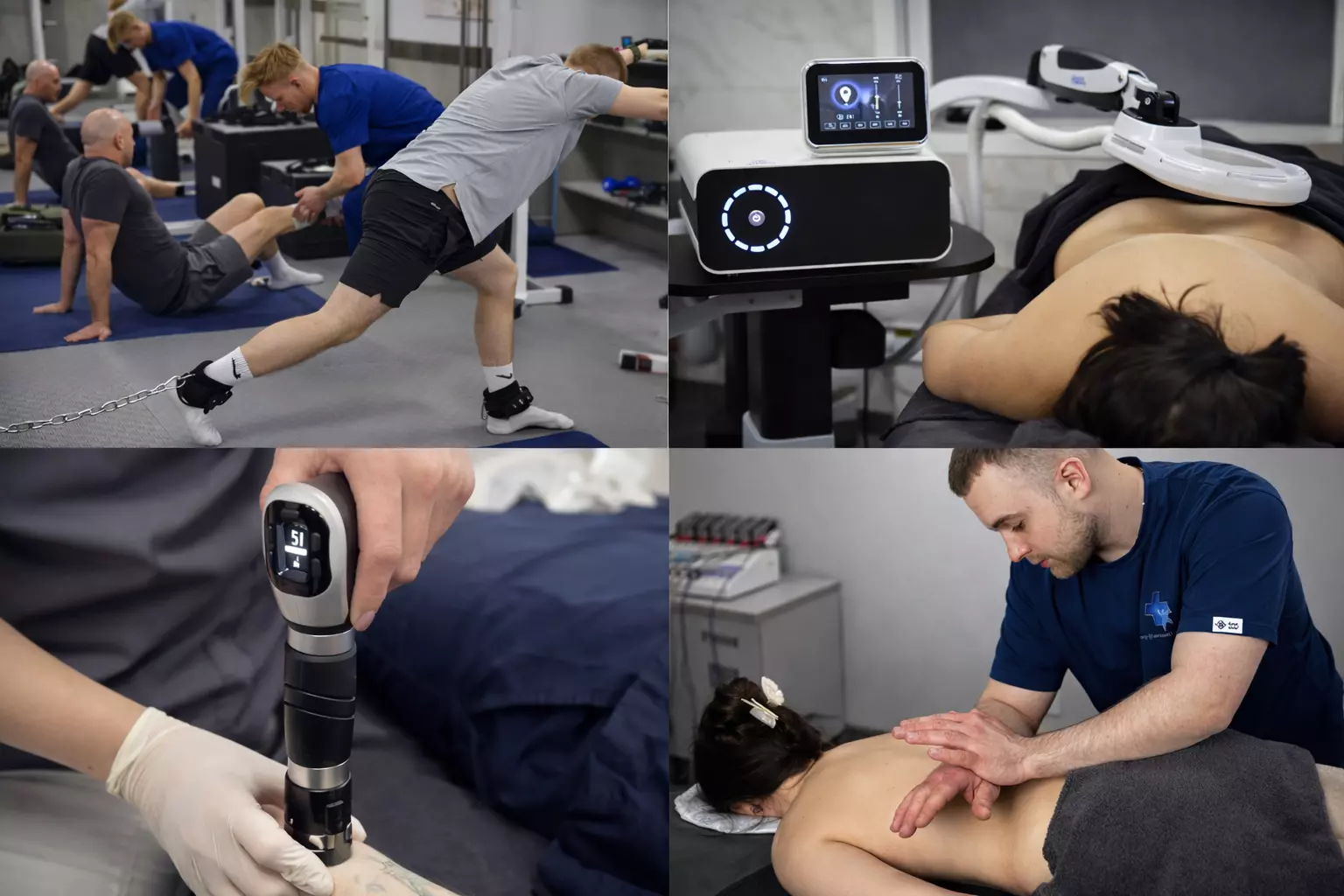
Wellness centers
Patients were helped
Specialists
Years of experience
Amplipulse therapy is a physiotherapeutic method in which the body is affected by sinusoidally modulated medium frequency currents. The procedure is painless, comfortable and suitable for patients of any age, including the elderly and athletes.
The currents act on nerves, muscles, joints and blood circulation, providing a pronounced analgesic, anti-inflammatory and restorative effect.
Reduces acute and chronic pain
Relaxes spasmed muscles
Improves blood circulation in the area of pain
Reduces the sensitivity of nerve endings
Reduces swelling and inflammation
Improves lymphatic drainage
Accelerates healing after injuries and surgeries
Activates blood supply to muscles, ligaments and joints
Increases oxygen and nutrient delivery
Accelerates tissue regeneration
Relaxes tense muscles
Tones weakened muscles (light training effect)
Improves joint mobility
Restores nerve fiber conductivity
Helps with neuropathic pain
Improves the functioning of the peripheral nervous system
Accelerates the healing of wounds, scars, and postoperative areas
Positively affects metabolic processes
osteochondrosis (cervical, thoracic, lumbar)
intervertebral hernias and protrusions (in the subacute phase)
radiculitis, radiculopathies
scoliosis, kyphosis, muscle-tonic syndromes
arthritis, arthrosis, gonarthrosis, coxarthrosis
bursitis, tendinitis, epicondylitis
sprain
muscle and tendon damage
rehabilitation after fractures
postoperative recovery
neuralgia of the trigeminal and other nerves
neuropathy (including diabetic - as prescribed by a doctor)
plexitis, neuritis
paresis, muscle weakness
venous outflow obstruction
lymphostasis (early stages)
vegetative-vascular dystonia (VVD)
chronic muscle spasm
myositis
fibromyalgia (partial relief)
chronic bronchitis (improves phlegm outflow)
gynecological chronic inflammations (as prescribed by a doctor)
urological congestive processes (prostatitis in the subacute stage)
reduction or complete elimination of pain
improved mobility
reducing swelling and inflammation
muscle recovery
acceleration of rehabilitation
improvement of general well-being
Course: 8–12 treatments
Duration of 1 session: 10–20 min
First result: noticeable after 2–4 sessions
We are grateful to everyone who has entrusted their health to us.
Your feedback is the best confirmation of the results of our work.
Share your impressions - they inspire us to become even better every day.
Leave your contacts — our specialist will contact you within 10–15 minutes to help you choose a service and answer all your questions.
We are always open for communication and ready to help you.
Call or email us to schedule a consultation or get detailed information.
Our experts will suggest the best solution for you.
Amplipulse therapy and SMT therapy in KINEZIUM is a physiotherapeutic technique using modulated currents to assist in pain, muscle tension and recovery within the framework of a rehabilitation program. The procedure is performed after assessing the condition, contraindications and the area of impact. It should not be prescribed automatically for any back or joint pain, because electrotherapy has its own limitations. During the session, the patient may feel rhythmic tingling, vibration or mild muscle contraction, depending on the mode. The intensity is selected individually and should not cause sharp pain.
Amplipulse therapy may be useful for patients with back pain, muscle tension, rehabilitation conditions or the need for hardware physiotherapy after examination. It can be considered as part of a course for pain in the neck, lower back, joints or local muscle areas, if there are no contraindications. If there is a pacemaker, impaired sensitivity, active inflammation or skin lesions, the technique should be reviewed.
Status or request | When amplipulse may be appropriate |
Back pain | As an adjunct to physiotherapy after assessing symptoms and contraindications |
Muscle tension | To deal with local spasm or discomfort |
Neck or lower back pain | If there are no acute neurological symptoms and the technique is safe |
Joint discomfort | As part of a comprehensive program with exercises and load control |
Rehabilitation state | After injuries or surgeries only with permission and restrictions |
The need for hardware methods | When the procedure is selected after examination, and not by self-prescription |
Amplipulse can help work with pain, spasm, local tension and improve range of motion within the framework of rehabilitation. If the muscles are defensively tense due to pain, electrotherapy can be an auxiliary step before active exercises. But it does not replace exercise therapy if you need to restore strength, stability or correct movement technique. The effect of the procedure depends on the diagnosis, course, device parameters and the patient's reaction. Therefore, the result is evaluated not only by the feeling after the session, but also by whether it has become easier to move.
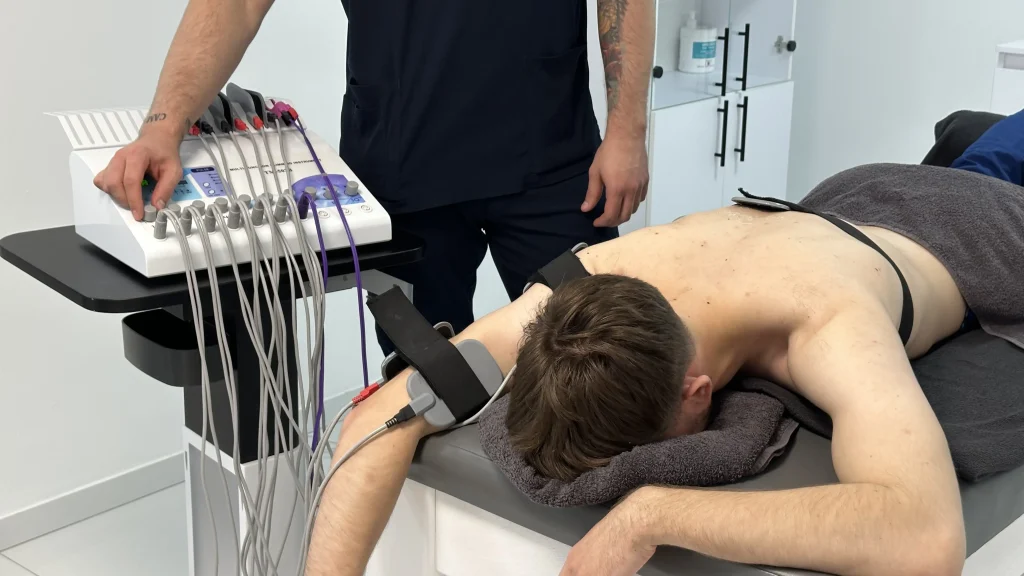
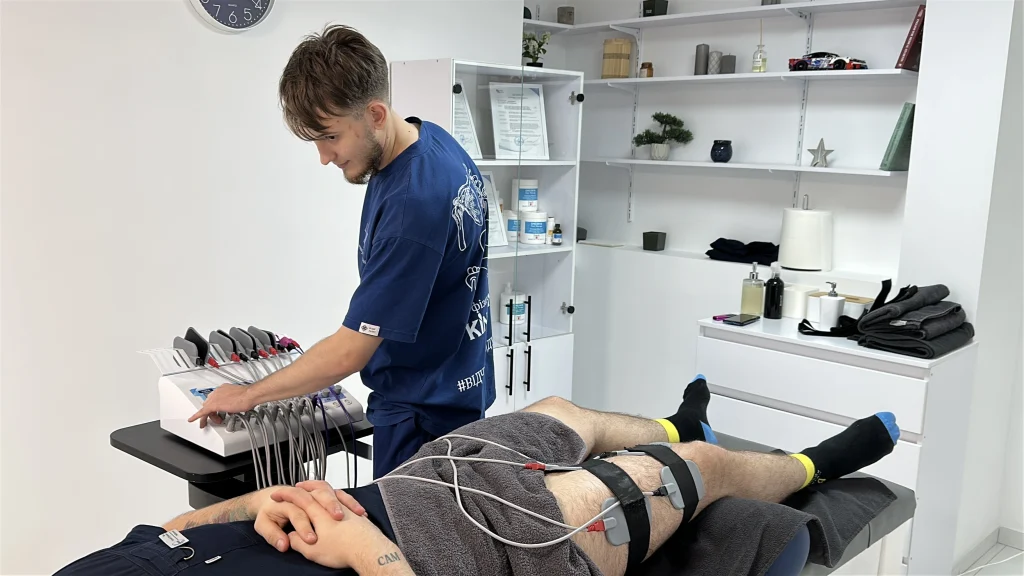
During SMT physiotherapy, the back, neck, lower back, joints and local areas selected after assessing the condition can be treated. The area of impact depends on the complaints: lower back pain, neck tension, discomfort in the shoulder, knee or other joint. Before the procedure, it is important to check the skin, sensitivity, the presence of metal implants in the area of impact, pacemaker or other electronic devices. Electrodes are not placed on damaged skin, areas of active inflammation or areas with impaired sensitivity without medical decision. The patient should report any discomfort during the procedure.
Amplipulse therapy at the KINEZIUM center in Kyiv begins with zone preparation, skin examination, contraindications and explanation of sensations during the procedure. The specialist places electrodes, adjusts the mode, intensity and duration of the session. During the procedure, the patient may feel tingling, pulsation or rhythmic effects, but not acute pain. After the session, the reaction is assessed: whether the discomfort has decreased, whether skin irritation, weakness or unpleasant sensations have appeared. If necessary, the parameters of subsequent procedures are adjusted.
Amplipulse differs from other physiotherapy procedures in that it uses a certain type of electric current that affects neuromuscular structures and pain sensations. Laser therapy works through light exposure, magnetotherapy through a magnetic field, and shock wave therapy through an acoustic wave. The choice of technique depends on the task, contraindications and patient tolerance.
Criterion | Amplipulse / SMT | Laser therapy | Magnetotherapy | UHT |
Type of impact | Modulated electrical currents | Light laser exposure | Magnetic field | Acoustic shock wave |
Feeling | Tingling, throbbing, mild contraction | Often minimal or mild heat | Usually faintly noticeable | Can be more intense and spotty |
Role | Pain, spasm, local tension | Auxiliary work with fabrics | Auxiliary physiotherapy | Local tendon or fascial conditions |
Limitation | Pacemaker, sensitivity, skin, pregnancy | Eyes, photosensitivity, cancer risks | Pacemaker, pregnancy, cancer risks | Blood clotting, thrombosis, pregnancy, growth zones |
Before amplipulse therapy, it is necessary to take into account pacemakers or implanted electronic devices, acute inflammation, oncological risks, pregnancy, skin lesions, sensitivity disorders, bleeding, thrombosis risks, epilepsy or other conditions where electrical effects may be undesirable. Electrodes are not applied to open wounds, irritated skin or areas where the patient does not feel the intensity well. If burning, sharp pain, dizziness or palpitations appear during the procedure, the session should be stopped.
The FDA, in its material on TENS and electrical stimulation, explains that electrotherapy devices should be used according to indications and limitations, and people with implanted electronic devices need special caution: https://www.fda.gov/medical-devices/consumer-products/tens-transcutaneous-electrical-nerve-stimulation. NCBI Bookshelf, in an article on electrotherapy for pain, describes the use of electrical methods as adjunctive interventions where parameters and safety are important: https://www.ncbi.nlm.nih.gov/books/NBK563150/. MedlinePlus reminds us in its article on joint pain that severe pain, hot or red skin, significant swelling, or fever require medical evaluation: https://medlineplus.gov/ency/article/003261.htm. Therefore, electrotherapy should not be started without checking for contraindications.
After amplipulse in KINEZIUM, you can expect a gradual reduction in discomfort, muscle tension and better tolerance of movement, if the procedure is selected according to the indications. The result depends on the diagnosis, course, parameters, tissue reaction and combination with rehabilitation. If the cause of pain is related to weakness, instability or overload, electrotherapy will not replace exercises. It should be considered as an auxiliary method within a wider program.
NCBI Bookshelf, in its article “In brief: Physical therapy,” describes physical therapy as a field that may include physical stimuli, exercises, and patient education: https://www.ncbi.nlm.nih.gov/books/NBK561514/. NCBI Bookshelf, in its article on electrotherapy methods for pain, emphasizes that effectiveness depends on the type of intervention, parameters, and patient condition: https://www.ncbi.nlm.nih.gov/books/NBK563150/. PubMed Central reviews on electrical stimulation for pain show that results may vary depending on the protocol and patient group: https://pmc.ncbi.nlm.nih.gov/articles/PMC9000175/. Practical conclusion: Amplipulse can help with symptoms, but a more stable recovery requires a movement program.
The price of amplipulse in Kyiv depends on the number of procedures, the area of impact, the duration of the session, the complexity of the condition and the need for consultation. If amplipulse therapy is included in a comprehensive program with exercise therapy, massage or other physiotherapy, the total cost is calculated according to the plan. To register with KINEZIUM, you need to report the complaint, the localization of pain, the presence of a pacemaker, pregnancy, skin lesions or sensitivity disorders. After the assessment, the specialist will determine whether SMT therapy is suitable, what course may be required and how to control the reaction. This will help to avoid procedures that do not correspond to the patient's condition.
Leave your contacts — our specialist will contact you within 10–15 minutes to help you choose a service and answer all your questions.
Leave your contacts - our specialist will contact you within 10-15 minutes to help with the service and answer all your questions.