wellness centers
patients were helped
specialists
years of experience
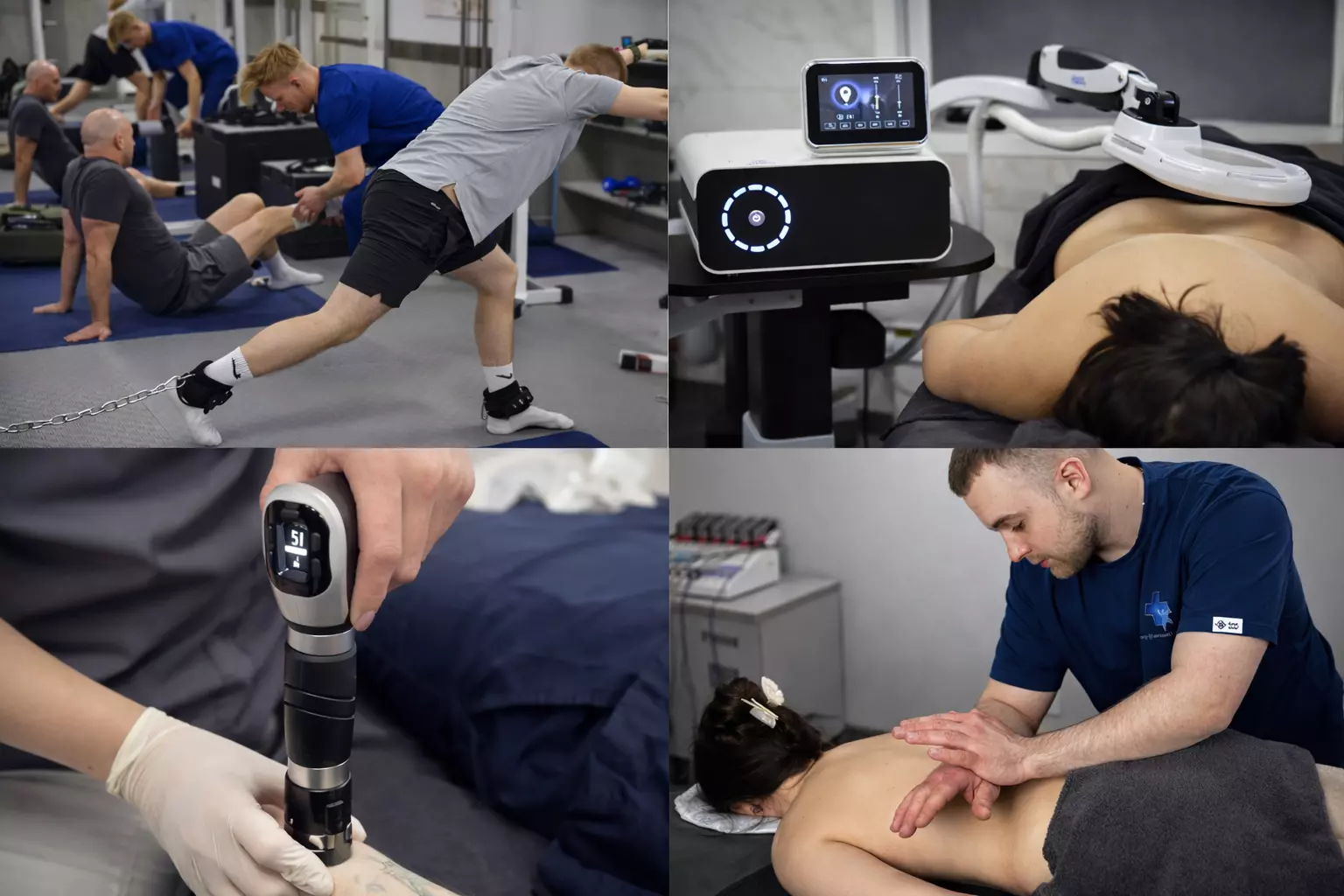
Stretch massage — is a technique that combines elements of therapeutic massage and controlled stretching of muscles and fascia. The procedure is aimed at restoring tissue elasticity, reducing tension and improving joint mobility. It is used both in rehabilitation and for the prevention of overload.
muscle stiffness and movement restrictions
chronic muscle strain
decreased flexibility
pain in the back, neck, limbs
recovery after physical exertion
preparation for exercise therapy or training
Combining massage techniques with gentle stretching allows you to:
reduce muscle spasm
improve the elasticity of muscles and fascia
increase the range of motion in the joints
improve blood circulation and tissue nutrition
reduce the risk of injuries during exercise
The procedure is performed under the supervision of a specialist and is adapted to the individual capabilities of the patient:
Assessment of mobility and areas of tension
Safe, dosed stretching
Combination with exercise therapy and therapeutic massage
Gradual increase in the amplitude of movements
Course approach — for a sustainable result
💡 The result of stretch massage — a feeling of lightness, reduced stiffness, improved flexibility and mobility without pain.
📌 Importantly: Stretch massage is not performed due to pain or sudden movements. The maximum effect is achieved in combination with physiotherapy and other rehabilitation methods.

Leave your contacts — our specialist will contact you within 10–15 minutes to help you choose a service and answer all your questions.
Relaxing massage at KINEZIUM is a gentle manual work with muscles, nervous tension, fatigue and general well-being. Its goal is not to “treat” complex diagnoses, but to help the body get out of a state of overexertion, reduce the feeling of stiffness and return a more comfortable feeling of movement. During the session, the specialist works with soft tissues, selects the intensity according to the patient's sensitivity and controls that the massage does not provoke sharp pain. This format is well suited after sedentary work, emotional overload, mild muscle fatigue or as part of general body care. If there is acute pain, injury, swelling or neurological symptoms, a specialist assessment is first required.
Relaxing massage after stress or overwork is suitable for people who feel tension in the back, neck, shoulders, fatigue after work, slight stiffness or a general feeling of "tightened" body. Often patients come after a long time sitting at the computer, an intensive work period, insufficient rest or emotional overload. It is important that relaxing massage should be comfortable and should not turn into a painful procedure.
Situation | When a relaxing massage may be appropriate |
Sedentary work | For tension in the neck, shoulders and back after prolonged static position |
Emotional overload | When the body reacts with muscle stiffness and shallow breathing |
Fatigue after work | If you need a gentle recovery format without deep painful effects |
Mild stiffness | When there is no acute inflammation, injury, or sharp pain |
Shoulder girdle tension | If your shoulders are constantly raised and you feel “tight” |
The need for relaxation | As a care procedure for overall body comfort |
A relaxing massage can help reduce tension in the back, neck, shoulders, fatigue after work and mild stiffness after prolonged sitting. A person often feels that the muscles seem to be “holding” stress, especially in the shoulder girdle, nape, between the shoulder blades or lower back. Soft, consistent work with the tissues can give a feeling of lightness, warmth, relaxation and better contact with the body. But if there is sharp pain, numbness, weakness or pain after an injury, these symptoms should not be masked with a relaxation session. In such cases, it is better to first undergo a consultation.
During a relaxation session, the back, neck, shoulder girdle, arms, legs and other areas of the body may be worked on, depending on the format of the procedure. Most often, attention is paid to areas where static tension accumulates: trapezius muscles, the area between the shoulder blades, lower back, calves or feet. The intensity is selected so that the patient feels comfortable, and not protective tension from pain. The sequence of zones is agreed upon before the session: you can focus on the back and neck or choose a more general format. If a certain area hurts sharply or has skin lesions, it is not worked on without additional assessment.
Relaxing massage at the KINEZIUM center in Kyiv begins with clarifying your well-being, complaints, areas of tension and contraindications. The specialist selects a comfortable intensity, pace, sequence of zones and monitors the patient's reaction during the session. The massage should not cause sharp pain, numbness, dizziness or severe discomfort. After the procedure, there may be recommendations for a water regimen, mild activity, rest and self-observation. If an unusual reaction or increased pain occurs after the session, it is important to inform the specialist.
Relaxation massage differs from therapeutic or sports massage primarily in its purpose, pace, and depth of impact. It is more focused on relaxation, reducing overall tension, and comfort, rather than working with a specific injury or sports overload. Therapeutic massage is more often associated with local discomfort and a rehabilitation plan, while sports massage is more often associated with muscle fatigue after exercise.
Criterion | Relaxing massage | Therapeutic massage | Sports massage |
Main goal | Relaxation and stress reduction | Dealing with local discomfort and function | Recovery after physical exertion |
Intensity | Mild or moderate | Selected according to the problem area | Often more active, but without acute pain |
Tempo | Calm, smooth | Depends on the purpose of the procedure | Could be more dynamic |
Expectation | Feeling of lightness and relaxation | Maintaining mobility and reducing stress | Help with muscle fatigue and stiffness |
Who is suitable for? | With stress, fatigue, sedentary work | For local muscle complaints after assessment | For active people and athletes after exercise |
Before a relaxing massage, it is important to consider temperature, acute inflammation, recent injuries, skin problems, rashes, open wounds, severe pain, vascular risks, suspected thrombosis or a sharp deterioration in well-being. If the pain appeared after a fall, impact or is accompanied by numbness or weakness, massage should not be the first step. Caution is also required when taking anticoagulants, oncological diseases, pregnancy or severe tissue sensitivity.
The NCCIH notes that the risk of adverse effects from massage is generally low, but rare serious complications have been described, including blood clots, nerve damage, or fractures, especially with intensive types of massage or in people at increased risk of injury: https://www.nccih.nih.gov/health/massage-therapy-what-you-need-to-know. URMC describes massage as working with muscles and soft tissues, using various methods of pressure and tissue movement: https://www.urmc.rochester.edu/encyclopedia/content?contentid=p00186&contenttypeid=85. MedlinePlus advises seeking medical attention if you have significant swelling, hot or red skin around the joint, fever, or severe pain: https://medlineplus.gov/ency/article/003261.htm. Therefore, even a gentle relaxation massage should begin with checking basic limitations.
After a relaxing massage at KINEZIUM, you can expect reduced muscle tension, a feeling of lightness, better relaxation and a more comfortable well-being. The effect is usually subjective and depends on the person's condition, stress level, sleep, physical activity and regularity of recovery. Such massage can be useful as part of body care, but should not be presented as a guaranteed treatment for pain, anxiety or chronic conditions.
The URMC describes massage as a method of working with muscles and soft tissues that can reduce muscle stress and utilize various techniques of pressure, kneading, vibration, and tissue movement: https://www.urmc.rochester.edu/encyclopedia/content?contentid=p00186&contenttypeid=85. NCBI Bookshelf in the review “Effects of massage in acute and critical care” analyzed studies on relaxation, comfort, and sleep, but the following conclusions should be transferred to a specific patient with caution: https://www.ncbi.nlm.nih.gov/books/NBK68452/. The NCCIH emphasizes in its material on massage that the quality of research on massage therapy varies, so the benefits depend on the condition, technique, and context: https://www.nccih.nih.gov/health/massage-therapy-what-you-need-to-know. So, the realistic goal of relaxation massage is comfort, stress reduction, and support for recovery, not medical assurance.
The price of a relaxing massage at KINEZIUM depends on the duration of the session, format, number of zones, intensity and number of procedures. For example, a short local session and a longer general body massage have different amounts of work. To sign up, just let us know what format you need: back and neck, general relaxation, legs, shoulder girdle or other emphasis. Before the first session, you should tell us about any injuries, skin problems, vascular risks, pregnancy or chronic conditions. This will help us choose a safe intensity and comfortable structure of the procedure.
Leave your contacts — our specialist will contact you within 10–15 minutes to help you choose a service and answer all your questions.