We work seven days a week from 9:00 to 20:00
Massages
Rehabilitation
Services
Consultations
We work from 9:00 to 20:00
 Skip to content
9 sessions + 1 as a gift
Wellness centers
Patients were helped
Specialists
Years of experience
The center employs a team of qualified massage therapists, physiotherapists, rehabilitation specialists and doctors, who have specialized education and regularly improve their qualifications.
All specialists work in close cooperation, forming a single individual rehabilitation plan after a detailed diagnosis. Our approach is aimed not only at eliminating symptoms, but primarily — to identify and work with the root cause of pain.
A comprehensive approach helps:
• reduce or completely eliminate pain;
• restore mobility and functionality;
• avoid or postpone surgery, when possible;
• effectively work with complex and chronic conditions.
KINEZIUM — it is a systematic approach, professional experience, and work for results.
Our goal is pain-free movement and a life without limitations.
Our center has implemented a well-thought-out loyalty system aimed at creating the most comfortable and beneficial conditions for patients who care about their health and undergo courses to restore the musculoskeletal system.
Subscription programs
For patients undergoing a course of procedures or classes, there is a special offer: when purchasing a subscription for 9 classes, 1 class is provided as a gift. This format allows you to undergo therapy systematically and get the maximum effect from treatment and rehabilitation.
Support for military personnel
With respect and gratitude to the defenders of Ukraine, our center offers a discount of 10% on procedures for military personnel.
Bonus system
For regular customers, there is a cumulative bonus program that provides additional benefits and the opportunity to receive special offers while undergoing treatment courses.
We strive to combine a high professional level of medical services, modern rehabilitation methods, and favorable conditions for our patients to make healthcare accessible, systematic, and effective.
The services of a medical rehabilitation center may be needed by people with back and joint pain, protrusions, arthrosis, neuropathy, scoliosis, the consequences of injuries, surgeries, or long-term restrictions on movement.
PRP therapy in rehabilitation - restoration using the body's own resources
A modern hardware technique of compression-vibration therapy that provides deep mechanical and functional warming of soft tissues without thermal effects.
Therapeutic blockades is a medical method of pain relief in which the doctor injects drugs directly into the area of pain, inflammation, or nerve compression.
Orthopedic insoles and products used to correct foot position, properly distribute the load, and reduce pain in the lower extremities and spine.
Amplipulse therapy is a physiotherapeutic method in which the body is affected by sinusoidally modulated medium frequency currents.
Magnetotherapy is a method of physiotherapy in which the body is affected by low-frequency or high-frequency magnetic fields.
Shockwave radial therapy is a modern physiotherapeutic method that uses acoustic waves for deep impact on muscles and connective tissues.
Ultrasound therapy is a modern physiotherapy method that uses high-frequency sound waves.
Physio-procedures are modern treatment and rehabilitation methods that use physical factors to reduce pain.
Decompression table is an effective non-drug method of treatment and rehabilitation of spinal diseases, which works on the principle of controlled stretching (decompression).
Manual correction is a method of manual intervention on the joints, spine, and soft tissues, aimed at restoring their mobility, reducing pain, and normalizing the biomechanics of movements.
Acupuncture is a method in which ultra-fine sterile needles are injected into biologically active points to affect the nervous, muscular, endocrine and immune systems.
Laser therapy is a modern physiotherapy method that uses focused laser light of low or medium power.
TECAR therapy is a modern method of deep restoration of muscles, ligaments and joints using high-frequency electromagnetic energy.
The center employs a team of qualified massage therapists, physiotherapists, rehabilitation specialists, and doctors who have specialized education and regularly improve their skills.
Focused shockwave therapy is a modern treatment method that uses high-energy acoustic waves, directed at one point at a depth of up to 12 cm.
Our team consists of experienced rehabilitation specialists, physiotherapists, and massage therapists who help people restore their health and return to an active life every day.
We combine modern techniques, an individual approach, and sincere care for each patient.
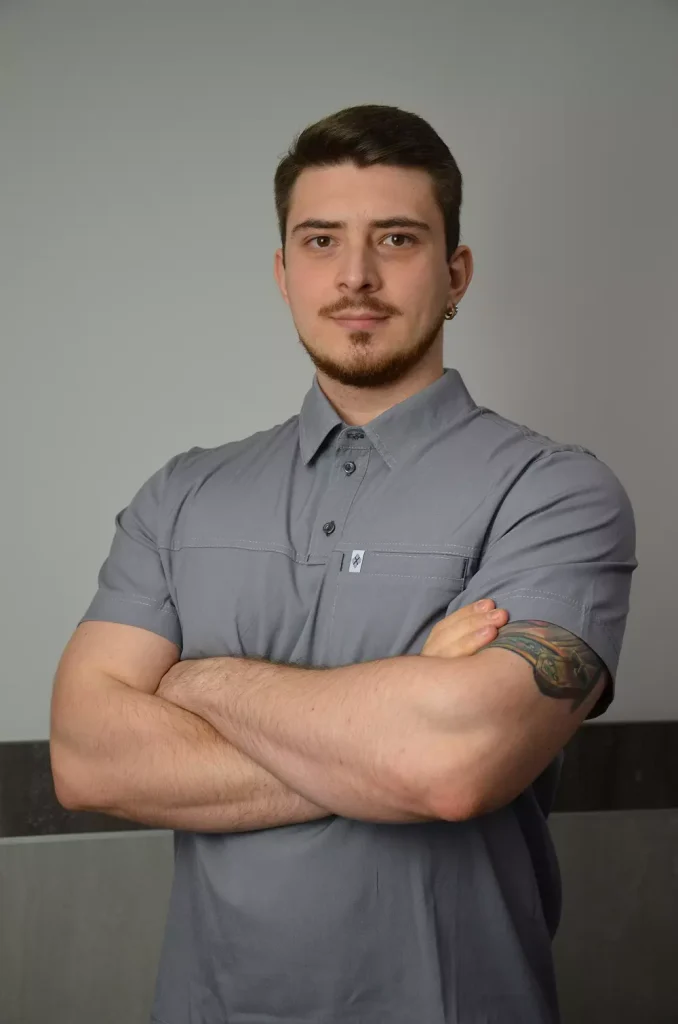
Chief Rehabilitation Specialist
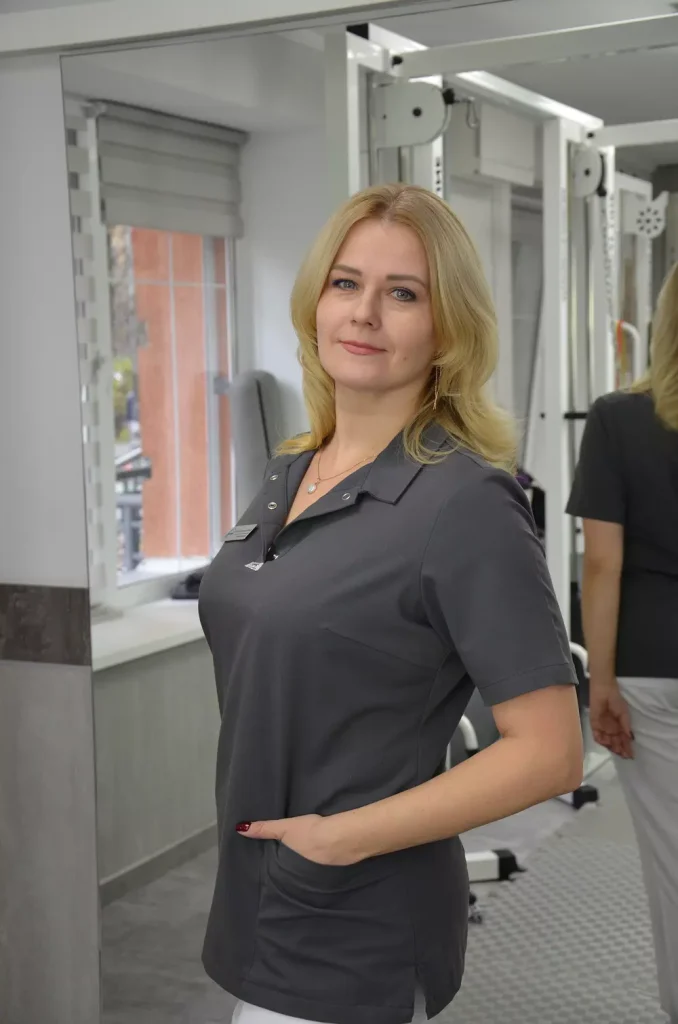
Chief physiotherapist
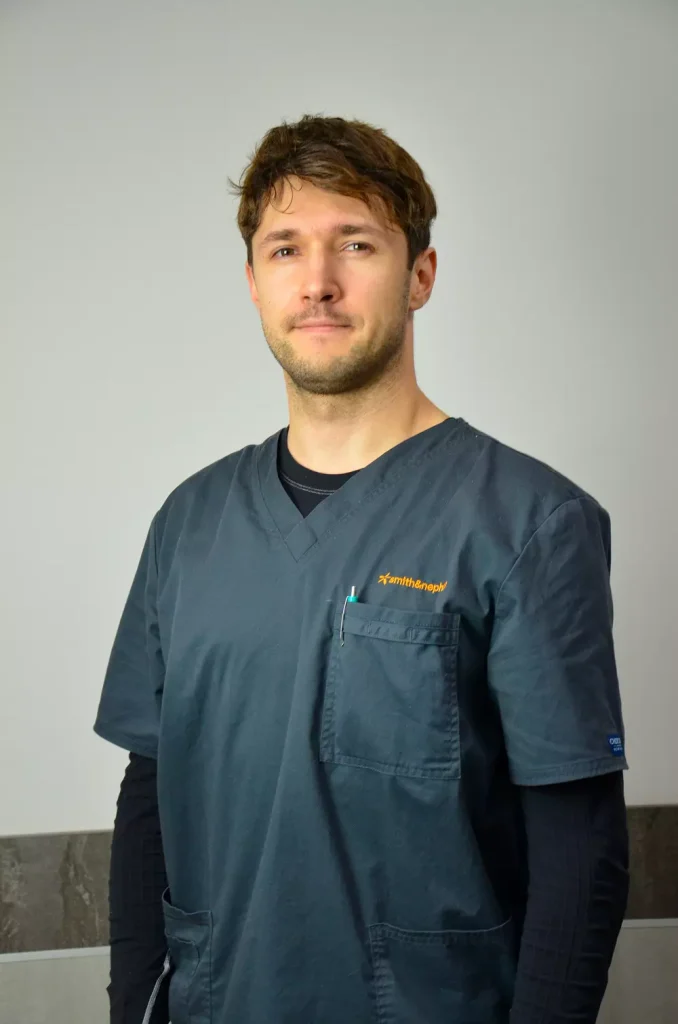
Orthopedic traumatologist
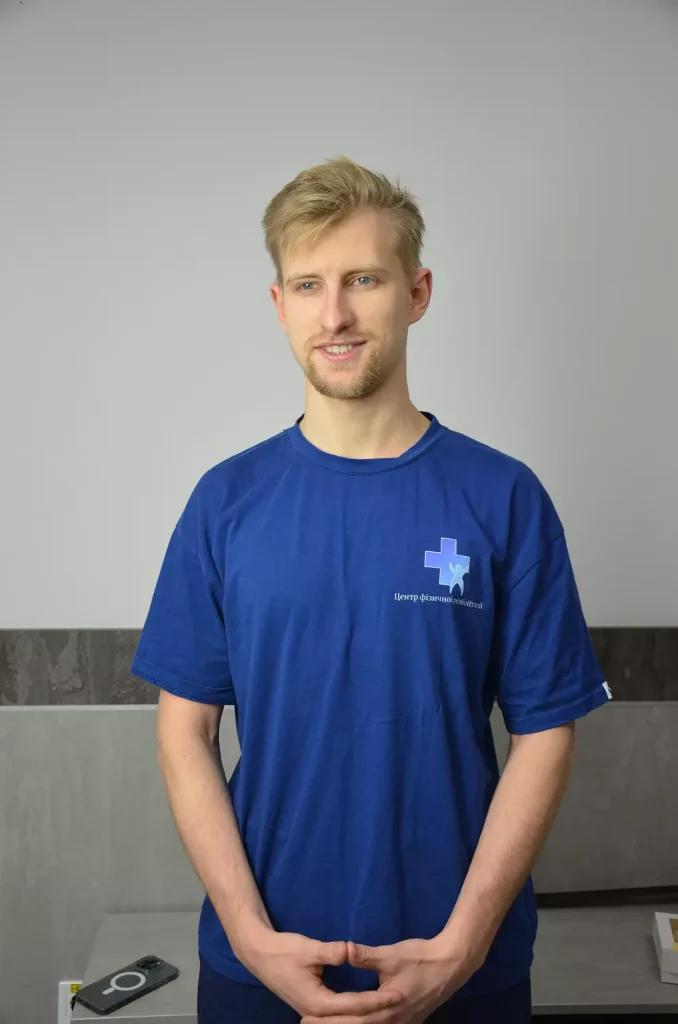
Chief rehabilitation specialist of physical therapy

Masseur
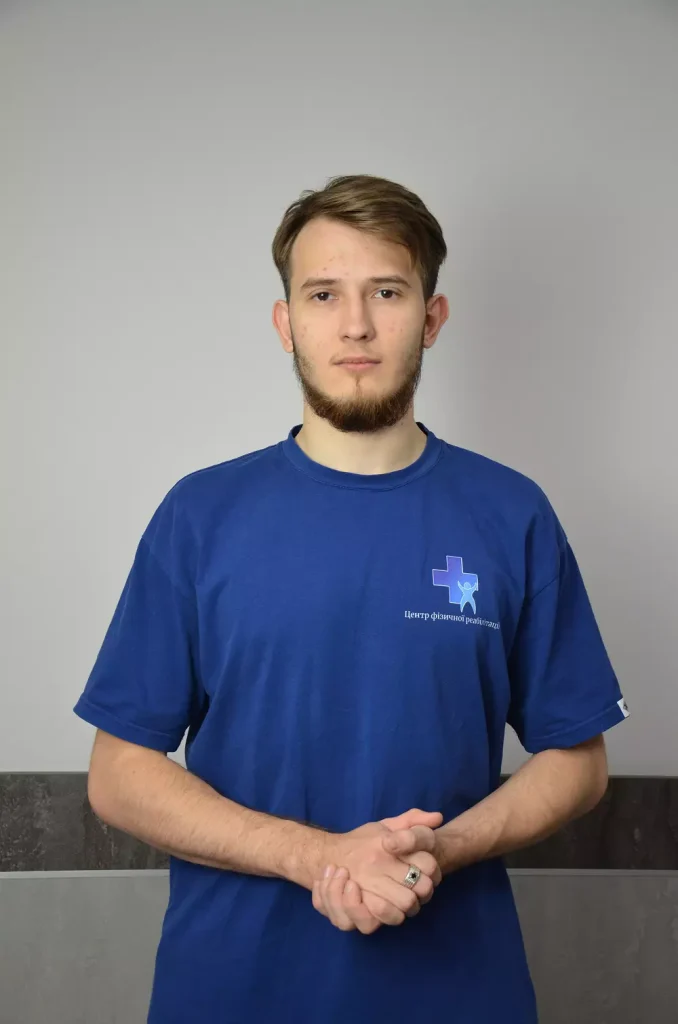
Masseur
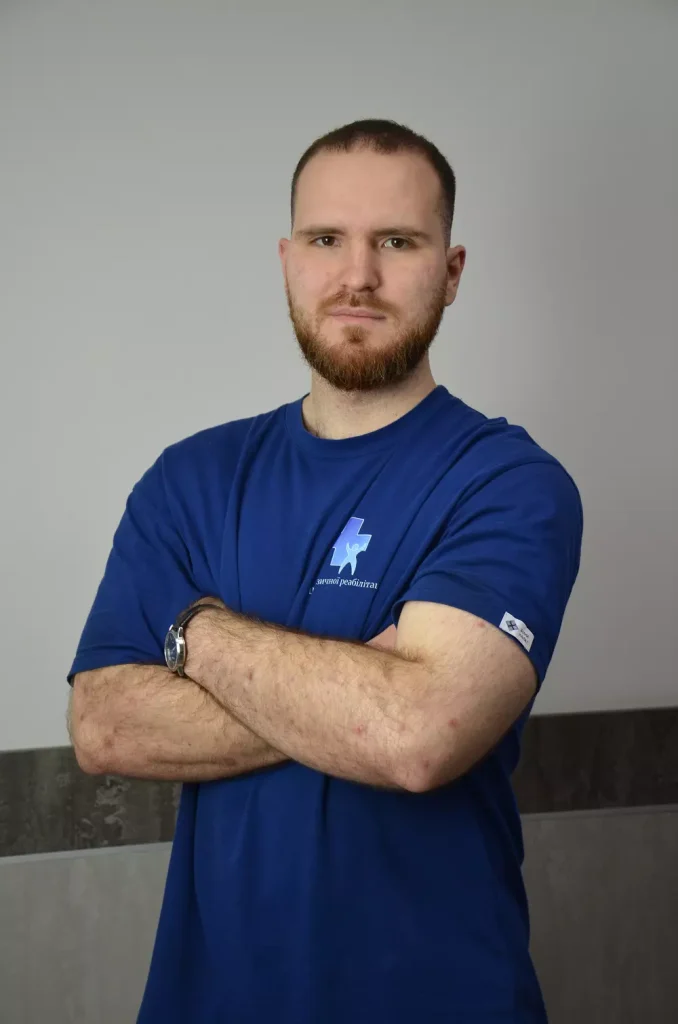
Masseur
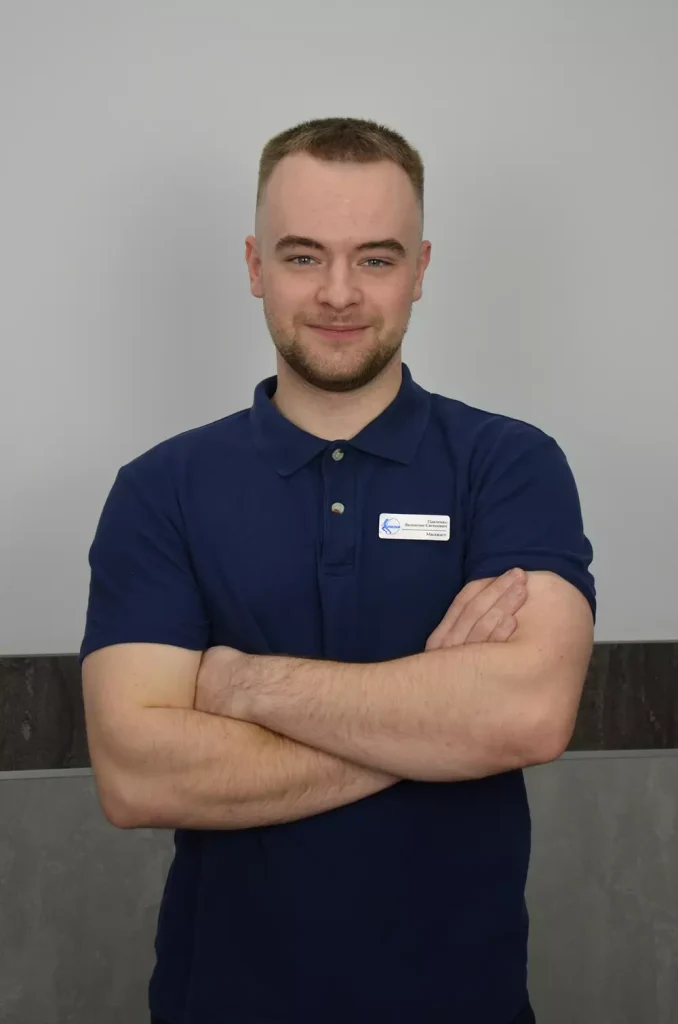
Masseur
Physiotherapy for the elderly at KINEZIUM is a safe restoration of mobility, strength, balance, gait and everyday activity, taking into account age, concomitant conditions and load tolerance. In older age, it is important not to force the pace, but to work gradually: assess pain, risk of falls, cardiovascular limitations, weakness, gait, balance and level of independence. The program may include therapeutic exercises, soft hardware techniques according to indications, balance, strength, coordination training and home recommendations. The goal is to help a person move more confidently, safely and with less fear of load. This is not a “charge for everyone”, but individual work with real everyday tasks.
Physiotherapy in the elderly may be needed for joint pain, muscle weakness, gait disturbance, risk of falls, recovery from surgery, fractures or prolonged inactivity. Patients often seek treatment when it becomes difficult to get out of a chair, climb stairs, stand for long periods, go for a walk or perform routine household tasks. Even a slight deterioration in balance in older age can seriously affect independence.
Situation | How the program can help |
Joint pain | Choose safe exercises for mobility, strength, and reducing overload |
Muscle weakness | Gradually regain strength for walking, standing, and everyday activities |
Gait disturbance | Improve support, stride length, symmetry, and confidence |
Risk of falls | Train balance, coordination, and safe movement strategies |
After surgery or fracture | Return function taking into account medical restrictions |
After prolonged inactivity | Gradually restore endurance and daily activity |
A rehabilitation program for older adults helps maintain mobility, strength, balance, coordination, endurance, safe walking, and daily independence. It may include training in getting up from a chair, weight-bearing, walking, turning, climbing stairs, and exercises for the legs, torso, and arms. The important part is teaching the person to move confidently but without undue risk. If there is pain, osteoporosis, osteoarthritis, postoperative limitations, or cardiovascular disease, the loads are dosed especially carefully. A good program does not exhaust the patient, but helps him or her to steadily regain function.
Physical therapy for older patients may include therapeutic exercises, gentle equipment as indicated, balance, gait, strength, coordination, and home exercises. If there is joint or back pain, physical therapy can help reduce discomfort and prepare the body for active exercise. If weakness or instability is the main problem, more emphasis is placed on leg strength, trunk control, support, and fall prevention. Exercises are selected so that the patient can perform them without severe pain, dizziness, or dangerous fatigue.
A KINEZIUM class or procedure begins with an assessment of well-being, complaints, comorbidities, risk of falls, pressure if necessary, load tolerance and previous reaction to the class. The specialist clarifies whether there were dizziness, falls, pain, swelling, shortness of breath, weakness or changes in medication. Then the pace is selected: gentle movements, sitting or standing exercises, gait training, balance, strength or physiotherapy procedure. During the class, breathing, fatigue, movement technique, stability and safety are monitored. After the session, the patient receives recommendations on what to do at home and what symptoms should be reported to the specialist.
Rehabilitation for older adults is characterized by a slower rate of progress, more careful safety monitoring, and greater attention to balance, gait, weakness, and comorbidities. In younger people, it is sometimes possible to increase intensity more quickly, but in older people, sudden increases in intensity can cause pain, fatigue, dizziness, or fear of movement. Therefore, it is important not to rush, but to steadily improve function.
Criterion | Standard program | Program for the elderly |
Pace of progress | Could be faster | Gradual, with more frequent response monitoring |
Security | General contraindications are taken into account | Additionally, falls, blood pressure, weakness, and concomitant diseases are monitored. |
Focus | Pain, mobility, strength, function | Gait, balance, independence, fall prevention and everyday activities |
Load | Can get complicated faster | Increase cautiously, as tolerated |
Home exercises | Often more active | Simple, safe, and realistic exercises are selected for implementation at home. |
Before starting physical therapy, it is important to consider cardiovascular risks, dizziness, high risk of falls, acute pain, swelling, fever, postoperative restrictions, severe weakness, and individual load tolerance. If the patient has recently fallen, has unstable blood pressure, chest pain, shortness of breath, rhythm disturbances, a sharp deterioration in gait, or new neurological symptoms, a medical evaluation is required before classes. It is also important to consider osteoporosis, diabetic neuropathy, visual impairment, anticoagulant use, and postoperative restrictions.
The National Institute on Aging / NIH advises older adults to include a variety of activities — endurance, strength, balance, and flexibility — but to choose exercises that are safe and appropriate for their health: https://www.nia.nih.gov/health/exercise-and-physical-activity. MedlinePlus explains in its article on exercise for older adults that balance exercises help prevent falls, strength exercises strengthen muscles, and flexibility exercises maintain mobility: https://medlineplus.gov/exerciseforolderadults.html. A systematic review and meta-analysis in PubMed Central shows that exercise can improve static and dynamic balance in older adults: https://pmc.ncbi.nlm.nih.gov/articles/PMC7466089/. So, exercise is beneficial, but the program must be tailored to the risks and tolerance of the individual.
After physiotherapy for the elderly, you can expect a gradual improvement in gait, balance, strength, confidence in movement and everyday activity. For some, an important result will be getting up from a chair more safely, for others - walking longer, less afraid of falling, climbing stairs better or leaving the house more confidently. The result depends on the initial condition, concomitant diseases, regularity of classes, home activity and family support. The program should not be exhausting, but should gradually give the body a clear and safe load.
The NIA/NIH emphasizes the importance of physical activity in older age and highlights endurance, strength, balance, and flexibility exercises as different components of healthy movement: https://www.nia.nih.gov/health/exercise-and-physical-activity. MedlinePlus describes four main types of exercise for older adults: aerobic, strength, balance, and flexibility: https://medlineplus.gov/exerciseforolderadults.html. A systematic review “Effects of Physical Activity Interventions on Strength, Balance and Falls in Middle-Aged Adults” in PubMed Central shows that physical activity can improve lower limb strength and balance, as well as affect the risk of falls: https://pmc.ncbi.nlm.nih.gov/articles/PMC10356733/. Practical conclusion: in old age, even small, but regular and properly selected progress can significantly affect independence.
To sign up for physiotherapy for the elderly at KINEZIUM, you need to describe the main complaints: pain, weakness, falls, gait disorders, surgery, fracture, inactivity or fear of exertion. If you have discharge notes, examination results, doctor's recommendations, a list of medications or information about blood pressure and cardiovascular conditions, you should prepare them for the initial assessment. The specialist will check the limitations, risk of falls, strength, balance, gait, load tolerance and determine a safe format of classes or procedures. After that, an individual program is drawn up with a gradual pace and clear home recommendations.
Leave your contacts - our specialist will contact you within 10-15 minutes to help with the service and answer all your questions.
Leave your contacts — our specialist will contact you within 10–15 minutes to help you choose a service and answer all your questions.
Leave your contacts - our specialist will contact you within 10-15 minutes to help with the service and answer all your questions.
Leave your contacts - our specialist will contact you within 10-15 minutes to help with the service and answer all your questions.
Leave your contacts - our specialist will contact you within 10-15 minutes to help with the service and answer all your questions.
Leave your contacts - our specialist will contact you within 10-15 minutes to help with the service and answer all your questions.
Leave your contacts - our specialist will contact you within 10-15 minutes to help with the service and answer all your questions.
Leave your contacts - our specialist will contact you within 10-15 minutes to help with the service and answer all your questions.
Leave your contacts - our specialist will contact you within 10-15 minutes to help with the service and answer all your questions.
Leave your contacts - our specialist will contact you within 10-15 minutes to help with the service and answer all your questions.
Leave your contacts - our specialist will contact you within 10-15 minutes to help with the service and answer all your questions.
Leave your contacts - our specialist will contact you within 10-15 minutes to help with the service and answer all your questions.
Leave your contacts - our specialist will contact you within 10-15 minutes to help with the service and answer all your questions.
Leave your contacts - our specialist will contact you within 10-15 minutes to help with the service and answer all your questions.
Leave your contacts - our specialist will contact you within 10-15 minutes to help with the service and answer all your questions.
Leave your contacts - our specialist will contact you within 10-15 minutes to help with the service and answer all your questions.
Leave your contacts - our specialist will contact you within 10-15 minutes to help with the service and answer all your questions.
Leave your contacts - our specialist will contact you within 10-15 minutes to help with the service and answer all your questions.
Leave your contacts - our specialist will contact you within 10-15 minutes to help with the service and answer all your questions.