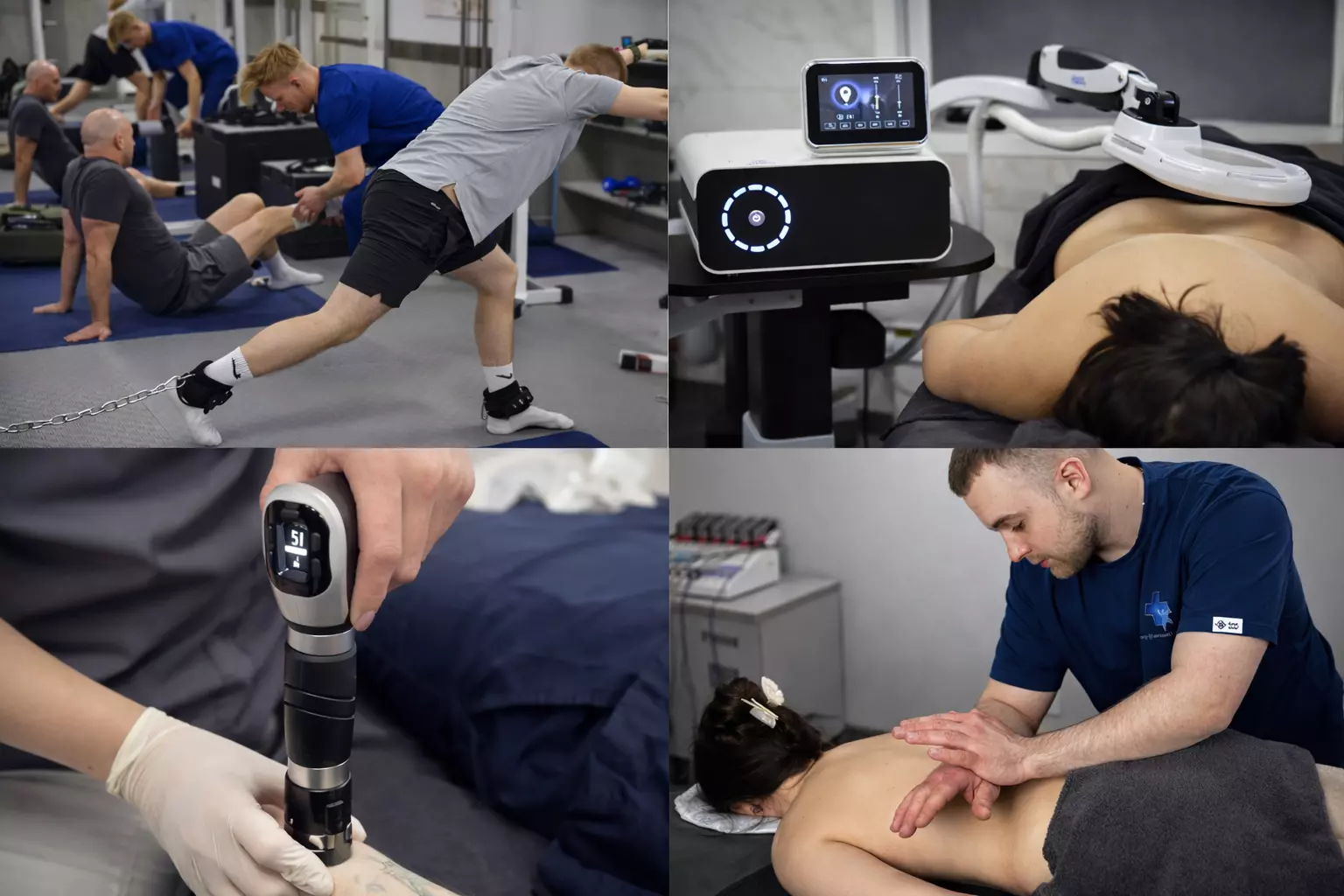
wellness centers
patients were helped
specialists
years of experience
Children's therapeutic massage — is a specialized technique aimed at the harmonious development of the child's musculoskeletal system, normalization of muscle tone, and prevention of posture and motor function disorders. The procedure is performed taking into account the age, health status, and individual characteristics of the child.
increased or decreased muscle tone
Postural disorders
flatfoot
scoliotic disorders
delayed motor development
consequences of birth injuries
prevention of overload during the growth period
A gentle and dosed effect on muscles and joints allows:
normalize muscle tone
improve blood circulation and lymph drainage
promote the correct formation of motor skills
reduce tension and discomfort
improve the child's overall well-being
The procedures are performed by a specialist with experience working with children and in a comfortable, calm atmosphere:
Preliminary assessment of the child's condition
Safe, age-old massage techniques
Combination with exercise therapy for children — to consolidate the result
Course approach — for a stable effect
Recommendations for parents — maintaining the result at home
💡 The result of children's therapeutic massage — improved mobility, proper muscle balance, formation of healthy posture and comfort in movement.

Leave your contacts — our specialist will contact you within 10–15 minutes to help you choose a service and answer all your questions.
Children's massage at KINEZIUM is a gentle work with the child's muscles, mobility, tone and general physical comfort, taking into account age and condition. It should be delicate, shorter and much more careful than adult massage. Before the procedure, the specialist clarifies the complaints of the parents, the child's well-being, the presence of fever, rashes, injuries, chronic conditions or doctor's recommendations. Massage for children should not contain aggressive or painful techniques. Its goal is to maintain comfort and mobility without exaggerated therapeutic promises.
Pediatric massage, after consultation with a specialist, may be appropriate for children with muscle tension, postural problems, mild stiffness, or a need for continued motor activity. It can be part of general care or an adjunct to a rehabilitation program, if appropriate for the child's age and condition. The decision to have a massage is best made after an evaluation, especially if there is pain, trauma, neurological symptoms, or chronic illness.
Situation | When baby massage may be appropriate |
Muscle tension | If the child is tense, complains of fatigue or discomfort after exertion |
Posture disorders | As an auxiliary method together with physical activity and exercises according to indications |
Mild stiffness | If there is no fever, acute pain, or injury |
The need for relaxation | When the child tolerates touch well and the procedure is comfortable |
Support for physical activity | As part of an individual program recommended by a specialist |
After loads | For muscle fatigue without signs of acute injury |
Massage for children can help maintain mobility, muscle tone, relaxation, and physical comfort. If a child has localized tension after sitting, studying, sports, or active play, gentle tissue work can be enjoyable and helpful as an adjunct. But massage for children should not replace a visit to a pediatrician, orthopedist, neurologist, or rehabilitation specialist if there is pain, gait disturbance, asymmetry, developmental delay, or injury. Realistic expectations are comfort and support, not guaranteed treatment for complex conditions. All techniques should be adapted to the child's age.
During a baby massage, the back, neck, arms, legs, feet, and areas of muscle tension may be worked on, depending on the child's age. For younger children, the work should be particularly gentle, brief, and responsive. For older children, you can be careful to work on areas that are overloaded due to posture, schoolwork, sports, or gadgets. If the child is uncomfortable, in pain, or anxious, the intensity is reduced or the procedure is stopped. The child's comfort and consent are an important part of a safe session.
Children's massage at the KINEZIUM center in Kyiv begins with getting to know the child and clarifying the complaints of the parents. The specialist asks about well-being, temperature, rashes, injuries, chronic diseases, previous doctor's recommendations and the child's reaction to touch. The intensity is chosen soft, with constant comfort control. Parents can be nearby to make the child feel calmer. After the procedure, the specialist can give simple recommendations on activity, monitoring the reaction and the need for consultation if there are medical complaints.
Children's massage differs from adult massage in terms of force of influence, duration, pace, method of communication and obligatory attention to the child's age. In children, tissues are more sensitive, and the emotional reaction to the procedure is of great importance. Therefore, aggressive techniques, strong pressure or painful format are inappropriate.
Criterion | Children's massage | Adult massage |
Power of influence | Soft, delicate, age-appropriate | Can be soft, medium or deeper |
Duration | Usually shorter | Often longer depending on the format |
Tempo | Calm, with pauses and reaction control | Selected according to the purpose of the session |
Communication | Through the child and parents, with constant comfort control | Mostly through direct patient feedback |
Target | Comfort, mobility, soft support | Relaxation, recovery, working with tension or pain |
Before performing a massage on a child, it is necessary to take into account the presence of fever, acute infections, rashes, open wounds, injuries, severe pain, malaise, exacerbation of chronic conditions, vomiting, severe weakness or suspicion of an acute medical condition. If the child has recently fallen, complains of sharp pain, limps or has swelling, a doctor's consultation is required before the massage. Also, the procedure is not performed due to the child's protest or severe discomfort.
The NCCIH notes that massage generally has a low risk of adverse effects, but safety depends on the person's condition, the technique, and the skill of the practitioner: https://www.nccih.nih.gov/health/massage-therapy-what-you-need-to-know. NCCIH, in its material “Massage Therapy for Health: What the Science Says,” specifically mentions research on infant massage, but emphasizes that the benefits depend on the group of children and should not be exaggerated: https://www.nccih.nih.gov/health/providers/digest/massage-therapy-for-health-science. A systematic review in BMJ Paediatrics Open on adverse events in pediatric massage therapy shows that safety issues need to be addressed, especially in infants and children with medical conditions: https://bmjpaedsopen.bmj.com/content/4/1/e000584. Therefore, infant massage should be performed gently, after assessment, and without painful techniques.
After a children's massage at KINEZIUM, you can expect comfortable and gentle results: relaxation, support for mobility, reduced tension and a more peaceful well-being. The reaction depends on the child's age, the state of the nervous system, the presence of complaints, tolerance of touch and general health. If there is a medical problem, massage should be part of the plan, not a substitute for diagnosis.
The NCCIH reports that there are separate studies for pediatric and infant massage, but the conclusions depend on age, condition, and specific indications: https://www.nccih.nih.gov/health/providers/digest/massage-therapy-for-health-science. A PubMed review of infant massage indicates that studies often have limitations, so results should be interpreted with caution: https://pubmed.ncbi.nlm.nih.gov/23633323/. BMJ Paediatrics Open, in a systematic review of adverse events, reminds us that even mild interventions in children require attention to safety: https://bmjpaedsopen.bmj.com/content/4/1/e000584. Practical conclusion: infant massage can be comfort support, but it needs to be adapted to the child and the medical context.
The price of children's massage in Kyiv depends on the child's age, session duration, format, goals and number of procedures. For younger children, the session is usually shorter and softer, for older children the amount of work may be different depending on the complaints. To sign up for KINEZIUM, parents should inform the child's age, main complaint, well-being, presence of fever, rashes, injuries or doctor's recommendations. If there are medical documents or specialist reports, it is better to take them with you on the first visit. This will help to choose a safe format for the procedure and understand whether additional consultation is needed.
Leave your contacts — our specialist will contact you within 10–15 minutes to help you choose a service and answer all your questions.