We work seven days a week from 9:00 to 20:00
Massages
Rehabilitation
Services
Consultations
We work from 9:00 to 20:00
 Skip to content
9 sessions + 1 as a gift
Wellness centers
Patients were helped
Specialists
Years of experience
Kinesiology taping is the application of elastic tapes to the skin to gently support muscles, joints, and movement. At KINEZIUM, taping is used as an adjunct in rehabilitation, sports, and work with overexertion or local discomfort.
Tape is not a substitute for treatment, exercise, rehabilitation, or medical fixation, but it can help improve sensation in the area, maintain movement, and reduce discomfort during activity.
🟢 Benefits of taping
1) Soft zone support
2) Support while driving
3) Supporting role in recovery
4) Comfort in everyday life and training
🩺 When it can be useful
Taping can be used for back, neck, and shoulder girdle strain, local joint discomfort, sports stress, functional tasks, or aesthetic applications on the face in the absence of skin irritation.
⚠️ When taping is not suitable
Tapes should not be applied to people with allergies to glue, skin irritation, wounds, dermatitis, active rashes, acute inflammation, swelling of unknown origin, or suspected thrombosis. If itching, burning, rash, or redness occurs after application, the tape should be removed.
The services of a medical rehabilitation center may be needed by people with back and joint pain, protrusions, arthrosis, neuropathy, scoliosis, the consequences of injuries, surgeries, or long-term restrictions on movement.
PRP therapy in rehabilitation - restoration using the body's own resources
A modern hardware technique of compression-vibration therapy that provides deep mechanical and functional warming of soft tissues without thermal effects.
Therapeutic blockades is a medical method of pain relief in which the doctor injects drugs directly into the area of pain, inflammation, or nerve compression.
Orthopedic insoles and products used to correct foot position, properly distribute the load, and reduce pain in the lower extremities and spine.
Amplipulse therapy is a physiotherapeutic method in which the body is affected by sinusoidally modulated medium frequency currents.
Magnetotherapy is a method of physiotherapy in which the body is affected by low-frequency or high-frequency magnetic fields.
Shockwave radial therapy is a modern physiotherapeutic method that uses acoustic waves for deep impact on muscles and connective tissues.
Ultrasound therapy is a modern physiotherapy method that uses high-frequency sound waves.
Physio-procedures are modern treatment and rehabilitation methods that use physical factors to reduce pain.
Decompression table is an effective non-drug method of treatment and rehabilitation of spinal diseases, which works on the principle of controlled stretching (decompression).
Manual correction is a method of manual intervention on the joints, spine, and soft tissues, aimed at restoring their mobility, reducing pain, and normalizing the biomechanics of movements.
Acupuncture is a method in which ultra-fine sterile needles are injected into biologically active points to affect the nervous, muscular, endocrine and immune systems.
Laser therapy is a modern physiotherapy method that uses focused laser light of low or medium power.
TECAR therapy is a modern method of deep restoration of muscles, ligaments and joints using high-frequency electromagnetic energy.
The center employs a team of qualified massage therapists, physiotherapists, rehabilitation specialists, and doctors who have specialized education and regularly improve their skills.
Focused shockwave therapy is a modern treatment method that uses high-energy acoustic waves, directed at one point at a depth of up to 12 cm.
We are grateful to everyone who has entrusted their health to us.
Your feedback is the best confirmation of the results of our work.
Share your impressions - they inspire us to become even better every day.
Leave your contacts — our specialist will contact you within 10–15 minutes to help you choose a service and answer all your questions.
We are always open for communication and ready to help you.
Call or email us to schedule a consultation or get detailed information.
Our experts will suggest the best solution for you.
Our team consists of experienced rehabilitation specialists, physiotherapists, and massage therapists who help people restore their health and return to an active life every day.
We combine modern techniques, an individual approach, and sincere care for each patient.
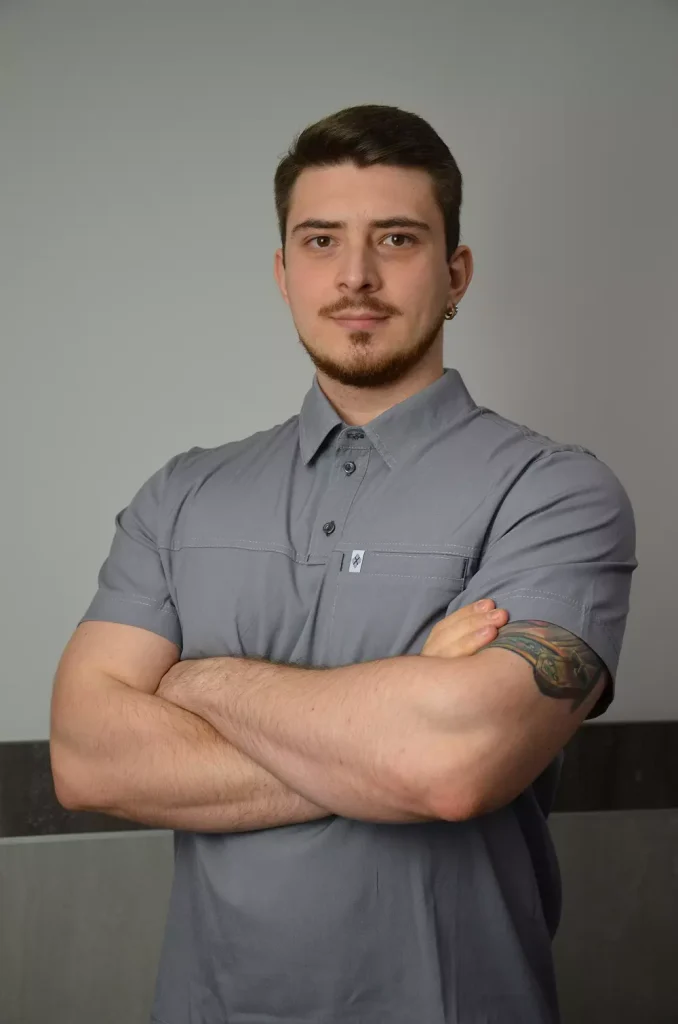
Chief Rehabilitation Specialist
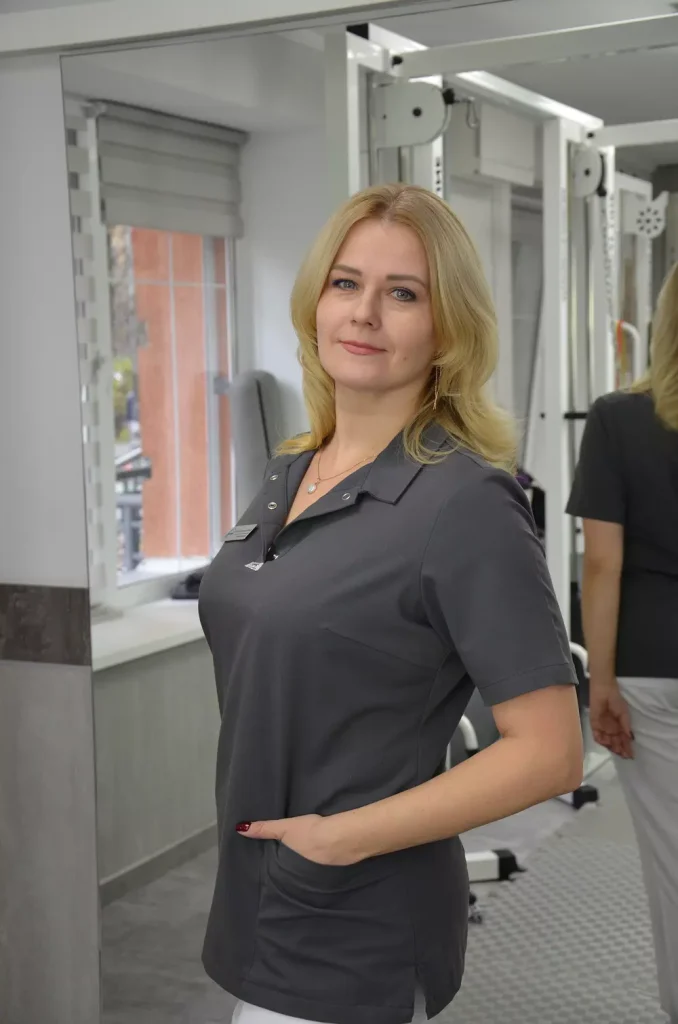
Chief physiotherapist
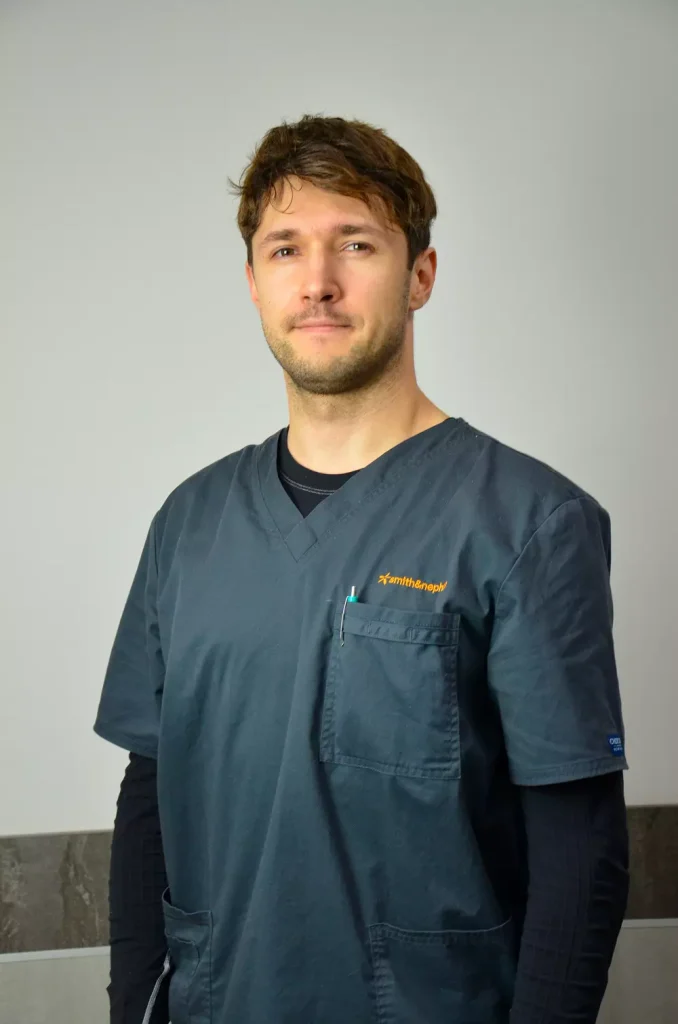
Orthopedic traumatologist
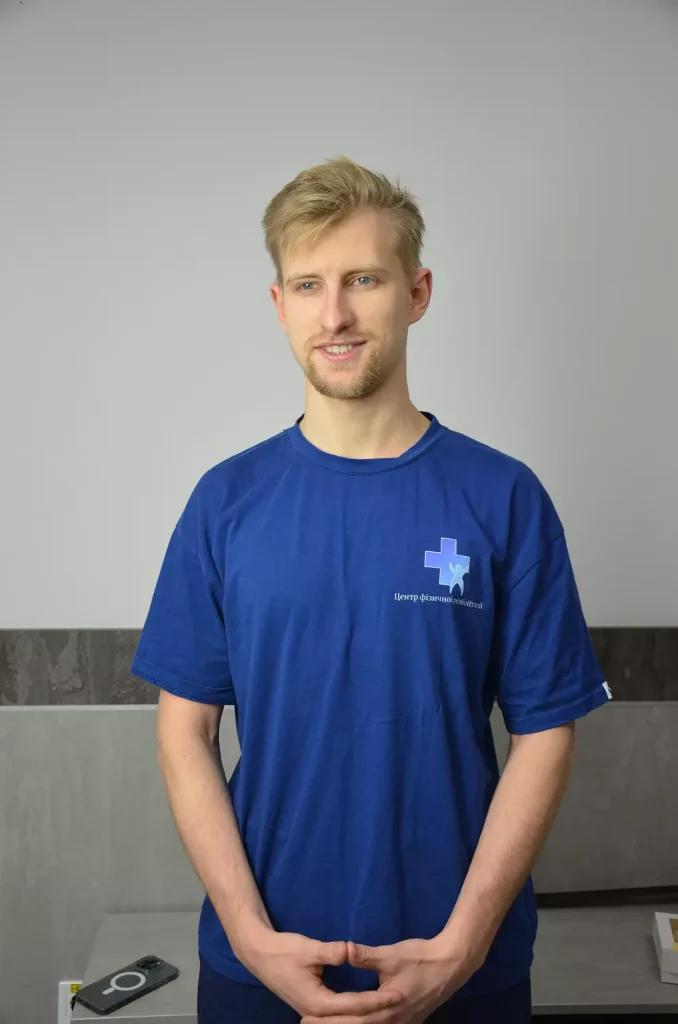
Chief rehabilitation specialist of physical therapy

Masseur
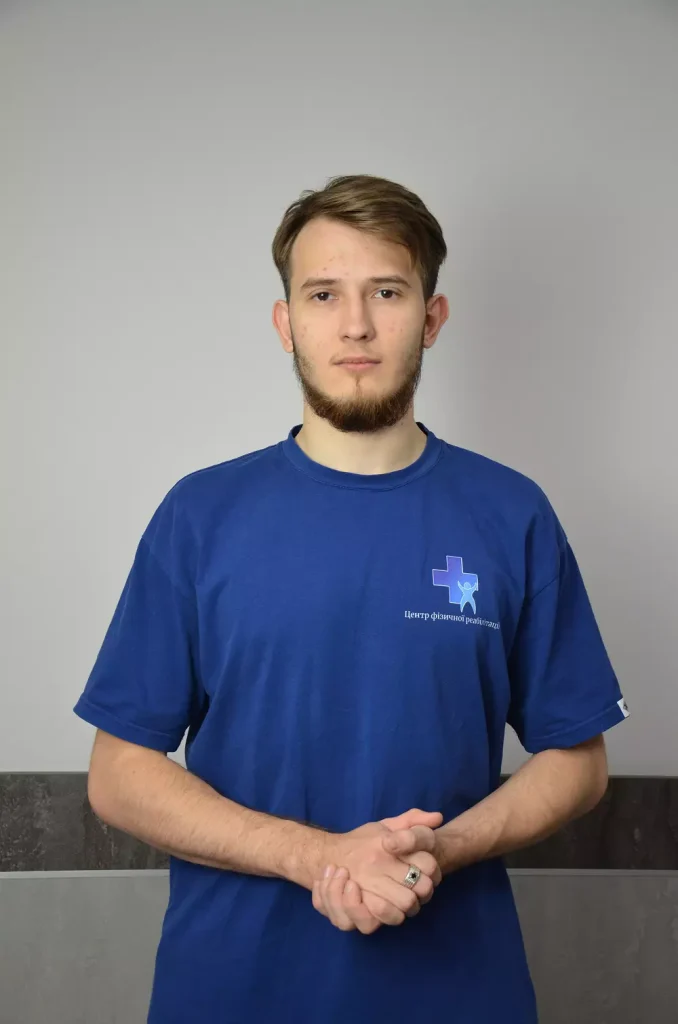
Masseur
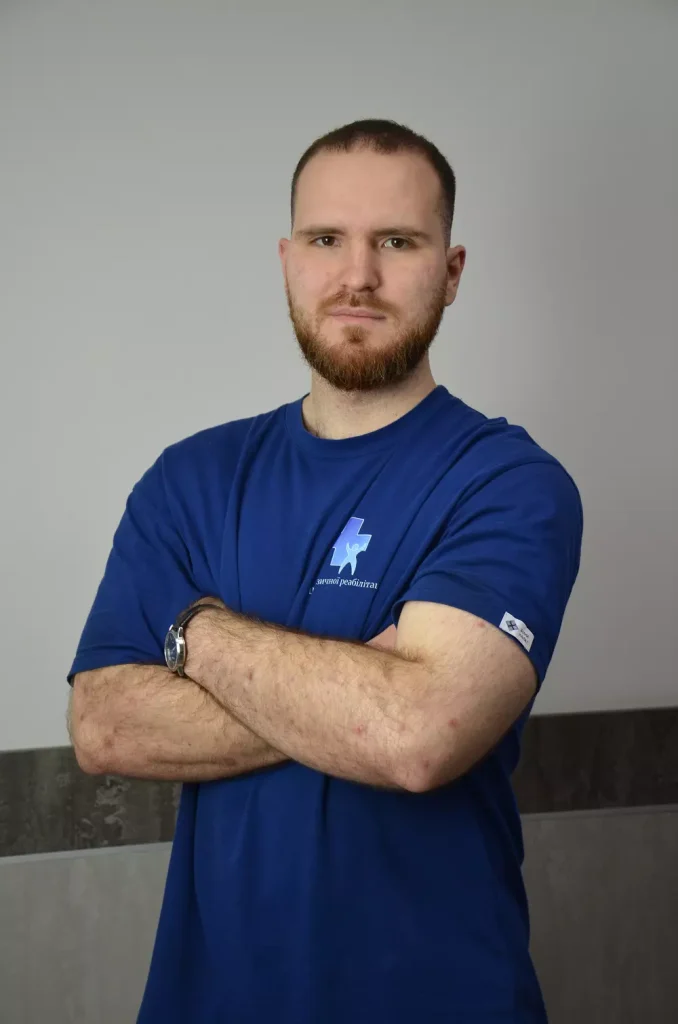
Masseur
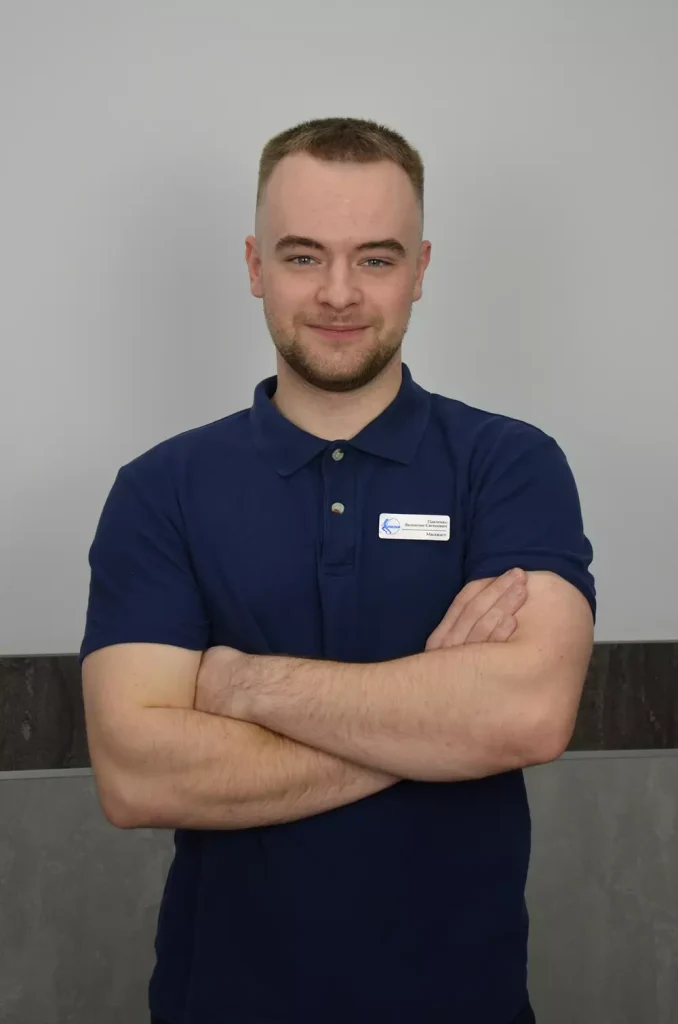
Masseur
Kinesiology taping at KINEZIUM is the application of elastic tapes to the skin to assist in movement, muscles, joints or local areas of tension. The tape does not replace treatment, rehabilitation, medical advice or exercise, but can be part of a recovery program. It is used to give the patient a better feel for the area, to provide gentle support during movement or to reduce discomfort from overexertion. The effect depends on the application technique, skin condition, application goal and patient activity. Before the procedure, it is important to check for allergies to the adhesive, irritation, wounds and contraindications.
Back or face taping may be necessary for muscle strain, the need for soft support of the area, sports loads, aesthetic or functional tasks. For the back, tape can be used as an auxiliary element when feeling tired or controlling posture. For the face, taping has a care or aesthetic format and requires special care due to the sensitivity of the skin.
Request or zone | When taping may be appropriate |
Back | For muscle strain or when you need a gentle reminder of body position |
Neck | In the absence of acute pain, dizziness, or neurological symptoms |
Shoulders | When exercising or feeling unstable within the rehabilitation plan |
Joints | As an auxiliary support without changing the brace in case of severe instability |
Face | For care or aesthetic purposes without skin irritation |
Sport | To support the area during activity, if the application technique is chosen correctly |
Taping can help maintain movement, create a sense of stability, work with overexertion, and play a supportive role in rehabilitation. Elastic tape does not completely block movement, so it can be useful when light support is needed without rigid fixation. In some patients, taping improves the feeling of control of the area or reduces discomfort during movement. However, if there is a ligament injury, fracture, acute swelling, or instability, taping is not a substitute for medical evaluation and proper fixation. Its role is supportive, not primary treatment.
During the procedure, you can tape the back, neck, shoulders, joints, face and local areas depending on the purpose. For muscle areas, the tape is applied so that it does not restrict movement, but gives a soft feeling of support. For joints, the application can be aimed at stability or movement control, but in case of severe instability, another fixation is required. On the face, tapes are applied only to healthy skin, without rashes, irritation or recent injection procedures. Before taping, the skin should be clean, dry and free of cream or oil.
Taping at the KINEZIUM center in Kyiv begins with an assessment of the area, complaints, purpose of application, and skin condition. The specialist checks for allergies to the adhesive, irritation, wounds, dermatitis, or acute inflammation. Next, the skin is prepared, the tape is cut into the desired shape, and applied with appropriate tension. After the procedure, the patient is explained the rules of wearing it: how long to leave the tape on, how to remove it, and what to do if there is itching, redness, or burning. If irritation occurs, the tape should be removed.
Kinesiology taping differs from fixation or a bandage in elasticity, degree of support and freedom of movement. Tape interacts gently with the skin and movement, while a bandage or rigid fixation limits the amplitude more. Therefore, taping may be appropriate for light support, but not for situations where stable immobilization is required.
Criterion | Kinesiology tape | Bandage or brace |
Elasticity | High, movement is maintained | Smaller, movement is partially restricted |
Degree of support | Mild or moderate | Higher, depending on design |
Freedom of movement | Usually stored | May be significantly limited |
Duration of wear | A few days depending on skin tolerance | Depends on the purpose and type of retainer |
When is suitable? | Soft support, zone feeling, rehabilitation tasks | Injuries, instability, need for greater fixation |
Before taping, it is necessary to consider allergies to glue, skin irritation, open wounds, dermatitis, acute inflammation, active rashes, thrombosis risks, sensory disturbances and severe pain of unknown origin. If the skin becomes red, burns, itches or a rash appears after taping, the tape should be removed. In case of edema of unknown origin, acute trauma or suspected thrombosis, taping should not be the first step.
MedlinePlus describes contact dermatitis as a skin reaction to an irritant or allergen that can manifest as redness, itching, and a rash: https://medlineplus.gov/ency/article/000869.htm. MedlinePlus describes symptoms that require medical evaluation in its article on deep vein thrombosis: pain, swelling, warmth, and discoloration of the limb: https://medlineplus.gov/deepveinthrombosis.html. A PubMed Central review of kinesiology taping emphasizes that the effect depends on technique, condition, and goals, so taping should not replace a medical route: https://pmc.ncbi.nlm.nih.gov/articles/PMC5702841/. Therefore, it is important to check the skin and clinical context before application.
After KINEZIUM taping, you can expect soft support of the area, comfort during movement, and an auxiliary effect in the rehabilitation program. In some patients, taping may reduce the feeling of overstrain or improve movement control, but the result is not guaranteed. If the cause of the discomfort is weakness, instability, or loading technique, exercises and rehabilitation are required. The tape should work as a supplement, not as a replacement for active recovery.
A PubMed Central review of Kinesio Taping for musculoskeletal conditions shows that the results of studies are heterogeneous and depend on the indication, methodology, and outcome assessed: https://pmc.ncbi.nlm.nih.gov/articles/PMC5702841/. Another PubMed systematic review on taping for pain and function also highlights the limited evidence and the need for appropriate use: https://pubmed.ncbi.nlm.nih.gov/25650501/. PubMed Central materials on sports taping show that the effect can vary depending on the goal—pain, stability, proprioception, or function: https://pmc.ncbi.nlm.nih.gov/articles/PMC7344720/. Practical conclusion: Taping can help with sensation and support, but a stable result depends on the overall program.
The price of taping in Kyiv depends on the area, complexity of the application, number of tapes, working time and the need for a preliminary assessment. Taping of the face, back, shoulder or several joints can have different volumes. To sign up for KINEZIUM, you should inform the area, the purpose of the taping, the presence of pain, injuries, skin irritation or allergies to glue. The specialist will select the form of the application, explain the rules of wearing and the signs when the tape should be removed. This will help make the procedure safer and more appropriate for your task.
Leave your contacts - our specialist will contact you within 10-15 minutes to help with the service and answer all your questions.
Leave your contacts — our specialist will contact you within 10–15 minutes to help you choose a service and answer all your questions.
Leave your contacts - our specialist will contact you within 10-15 minutes to help with the service and answer all your questions.
Leave your contacts - our specialist will contact you within 10-15 minutes to help with the service and answer all your questions.
Leave your contacts - our specialist will contact you within 10-15 minutes to help with the service and answer all your questions.
Leave your contacts - our specialist will contact you within 10-15 minutes to help with the service and answer all your questions.
Leave your contacts - our specialist will contact you within 10-15 minutes to help with the service and answer all your questions.
Leave your contacts - our specialist will contact you within 10-15 minutes to help with the service and answer all your questions.
Leave your contacts - our specialist will contact you within 10-15 minutes to help with the service and answer all your questions.
Leave your contacts - our specialist will contact you within 10-15 minutes to help with the service and answer all your questions.
Leave your contacts - our specialist will contact you within 10-15 minutes to help with the service and answer all your questions.
Leave your contacts - our specialist will contact you within 10-15 minutes to help with the service and answer all your questions.
Leave your contacts - our specialist will contact you within 10-15 minutes to help with the service and answer all your questions.
Leave your contacts - our specialist will contact you within 10-15 minutes to help with the service and answer all your questions.
Leave your contacts - our specialist will contact you within 10-15 minutes to help with the service and answer all your questions.
Leave your contacts - our specialist will contact you within 10-15 minutes to help with the service and answer all your questions.
Leave your contacts - our specialist will contact you within 10-15 minutes to help with the service and answer all your questions.
Leave your contacts - our specialist will contact you within 10-15 minutes to help with the service and answer all your questions.
Leave your contacts - our specialist will contact you within 10-15 minutes to help with the service and answer all your questions.