We work seven days a week from 9:00 to 20:00

Massages
Rehabilitation
Services
Consultations
We work from 9:00 to 20:00
 Skip to content

9 sessions + 1 as a gift
Wellness centers
Patients were helped
Specialists
Years of experience
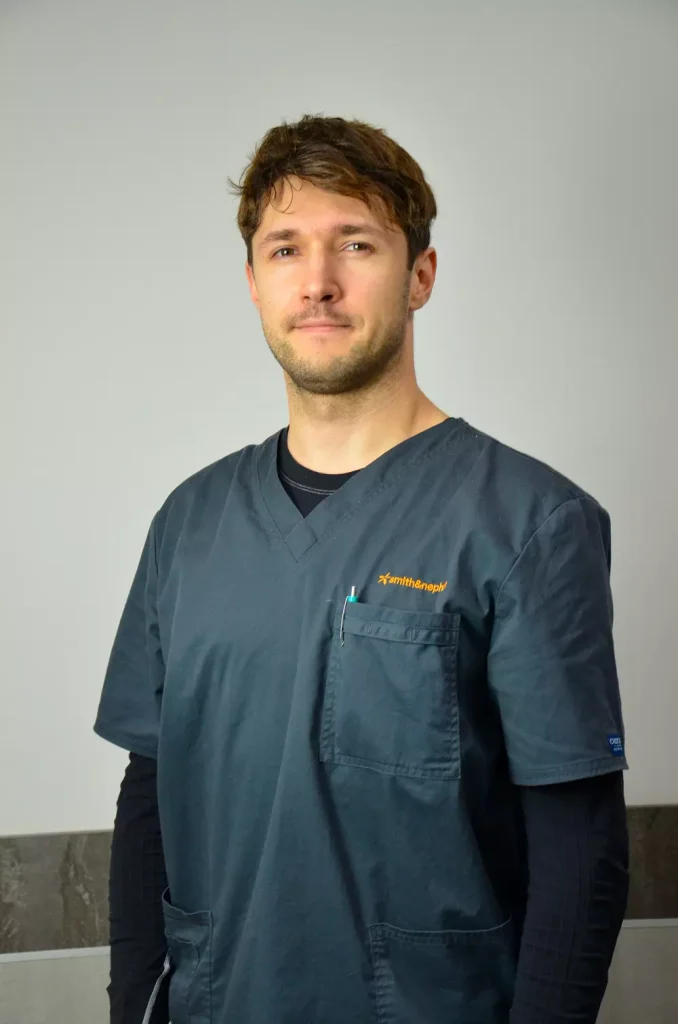
Orthopedic traumatologist
A network of rehabilitation centers where knowledge is passed down from generation to generation.


We are grateful to everyone who has entrusted their health to us.
Your feedback is the best confirmation of the results of our work.
Share your impressions - they inspire us to become even better every day.
Leave your contacts — our specialist will contact you within 10–15 minutes to help you choose a service and answer all your questions.
We are always open for communication and ready to help you.
Call or email us to schedule a consultation or get detailed information.
Our experts will suggest the best solution for you.
An orthopedic traumatologist is a specialist who diagnoses and treats injuries, joint pain, fractures, ligament injuries, post-operative conditions and movement restrictions. At KINEZIUM, such a doctor is important not only at the stage of acute injury, but also when the patient is already moving on to rehabilitation. It is the orthopedic traumatologist who can assess whether there is enough data to start loading, whether additional examination is needed, and whether there are risks to the joint, bone or soft tissues.
In practice, a consultation helps answer key questions: what exactly is damaged, why the pain persists, whether the limb can be moved, whether support is allowed, which exercises are undesirable for now, and when to include physiotherapy or exercise therapy. In the KINEZIUM team approach, the doctor can work together with rehabilitation specialists and physiotherapists to ensure that the recovery program does not contradict medical limitations. This is especially important after fractures, surgeries, endoprosthetics, and complex joint injuries.
Consultation with an orthopedic traumatologist is necessary in case of injury, pain, swelling, limited movement, suspected fracture, joint instability, consequences of surgery, or the need to draw up a rehabilitation plan. Do not wait if the pain is sharp, the limb is deformed, it is impossible to stand on the leg or move the arm, there is numbness or increasing swelling. In less acute cases, consultation is necessary if the symptoms do not go away, recur during exertion, or interfere with everyday activities.
Situation | Why do you need an orthopedic traumatologist? |
Acute trauma | Rule out a fracture, dislocation, torn ligament, or other serious injury |
Joint pain | Assess the source of pain, mobility, inflammatory or degenerative changes |
Swelling after injury | Determine if there is intra-articular injury or complication |
After surgery | Specify restrictions, permissible load, rehabilitation stage |
After a fracture | Assess union, need for physiotherapy, exercise therapy, and movement control |
Rehabilitation plan | Determine what can be done safely and what is still too early |
The consultation begins with a collection of complaints: when the pain appeared, whether there was an injury, what movement provokes the symptoms, whether there is swelling, instability, locking, numbness or limitation of support. Next, the doctor examines the problem area, assesses the amplitude of movements, local soreness, functional tests, skin condition, limb axis and possible neurological signs. If the patient has an X-ray, MRI, CT, ultrasound, discharge or postoperative recommendations, this data helps to more accurately determine the tactics.
After the examination, the doctor explains what may be causing the symptoms, whether further examination is needed, what limitations should be considered, and what steps to take next. This may include medication support, orthotics, physiotherapy, exercise therapy, consultation with an allied specialist, or referral to urgent medical care if complications are suspected. In a rehabilitation center, it is especially important that the consultation ends with a clear recovery plan.
An orthopedic traumatologist is primarily responsible for the medical diagnosis of injuries, joints, bones, ligaments, and post-operative conditions. He determines whether there are injuries, what restrictions are necessary, whether the limb can be loaded, and whether additional examinations or treatment are needed. A rehabilitation specialist works with the function of: how to restore mobility, strength, coordination, gait, everyday movements, and load tolerance.
Criterion | Orthopedic traumatologist | Rehabilitation specialist |
The main task | Diagnostics and medical tactics | Restoring function and movement |
What evaluates | Bones, joints, ligaments, images, risks | Range, strength, gait, balance, daily limitations |
What determines | Restrictions, treatment, need for further examination | Exercise program, load progression, homework |
After a fracture | Checks the splicing and permissible load | Restores movement, strength, resistance, function |
In pain | Looking for a medical cause and risks | Helps return to activity safely |
Urgent treatment is required in case of sharp pain after an injury, visible deformity, inability to support the leg, inability to move the limb, significant swelling, rapid growth of a bruise or suspicion of a fracture. Other dangerous signs are numbness, severe weakness, cold or pale limb, impaired sensitivity, open wounds, signs of infection after surgery, fever and redness in the wound area. In such cases, there is no need to “work out” the joint or wait for it to pass on its own.
If the pain has occurred after a fall, impact, sports injury, or sudden twisting, it is best to first rule out structural damage. Active rehabilitation without diagnosis can be dangerous in the event of a fracture, ligament tear, instability, or infection. For acute symptoms, you should consult a doctor or go to the emergency room, and rehabilitation should only be started after medical clearance.
The main outcome of the consultation is a clear plan of action. The patient should come away with an understanding of what may be causing the pain, what examinations are needed or are already sufficient, what restrictions must be observed, and whether rehabilitation, physiotherapy or exercise therapy can be started. At KINEZIUM, this is also important because further recovery can be carried out as a team: the doctor determines the medical framework, and rehabilitation specialists and physiotherapists help restore movement and function.
AAOS OrthoInfo explains that materials on orthopedic conditions are developed and reviewed by experts from the American Academy of Orthopaedic Surgeons, and sections on injuries and recovery help patients understand treatment options: https://orthoinfo.aaos.org/. MedlinePlus, in its articles on rehabilitation, emphasizes the role of physical therapy, strength, and mobility in restoring function: https://medlineplus.gov/rehabilitation.html. NCBI Bookshelf, in its section on fracture healing, emphasizes interprofessional collaboration and progress monitoring during physical therapy: https://www.ncbi.nlm.nih.gov/books/NBK551678/. So, a consultation with an orthopedic traumatologist is not just a diagnosis, but the start of a safe route from pain or injury to controlled recovery.
To make an appointment with an orthopedic traumatologist in Kyiv, you should briefly describe the problem: injury or pain without injury, date of onset of symptoms, localization, swelling, limitation of movements, possibility of support and previous examinations. At KINEZIUM, it is advisable to take X-rays, MRI, CT, ultrasound, discharge, surgeon's recommendations or a list of medications, if any, to the consultation. This will help the doctor assess the condition more quickly and avoid duplicating unnecessary steps.
After the consultation, the patient receives recommendations for further actions: further examination, treatment, physiotherapy, exercise therapy, rehabilitation or referral to another specialist. If there are acute signs - deformity, severe pain, inability to support oneself, numbness, infectious symptoms - the referral should not be postponed. In such cases, a quick medical assessment is more important than a scheduled appointment.
Leave your contacts — our specialist will contact you within 10–15 minutes to help you choose a service and answer all your questions.
Leave your contacts - our specialist will contact you within 10-15 minutes to help with the service and answer all your questions.
Leave your contacts - our specialist will contact you within 10-15 minutes to help with the service and answer all your questions.
Leave your contacts - our specialist will contact you within 10-15 minutes to help with the service and answer all your questions.
Leave your contacts - our specialist will contact you within 10-15 minutes to help with the service and answer all your questions.