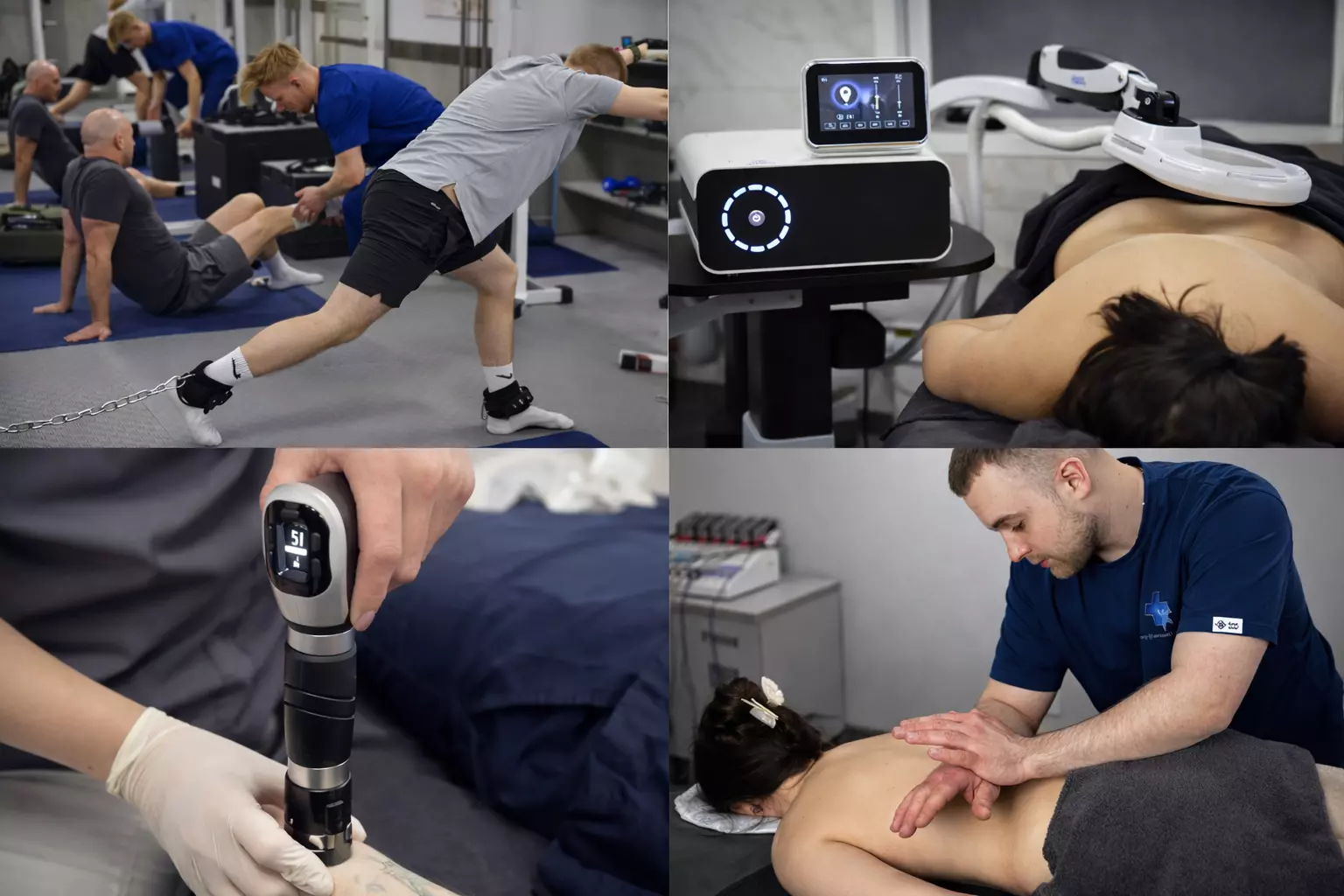
wellness centers
patients were helped
specialists
years of experience
Rehabilitation after a pelvic fracture in KINEZIUM is a recovery after a pelvic injury, aimed at safe support, gait, muscle strength, balance and a gradual return to everyday activities. Pelvic fractures can significantly affect the ability to sit, stand, walk, bear body weight and control the position of the body. The program depends on the stability of the fracture, the operation, the allowed support, pain, neurological symptoms and the recommendations of the traumatologist. In KINEZIUM, images, gait, support, muscle strength of the pelvic girdle, balance, mobility of the hip joints and everyday tasks are assessed. The goal is to restore confidence in movement without premature load on the pelvic ring.
A pelvic fracture can occur after a car accident, a fall from a height, a severe blow, a fall in old age, or an injury due to osteoporosis. The pelvic ring transfers the load between the torso and legs, so even after fusion, the patient needs a gradual return to support.
Reason | What can happen? |
Road accident or high-energy trauma | Possible complex pelvic fractures and associated injuries |
Fall from a height | Heavy load is transmitted through the legs or pelvis |
Fall in old age | With osteoporosis, a fracture is possible even after a minor injury. |
Direct hit | Damage to individual pelvic bones or soft tissues |
Sports injury | Less common, but possible with a strong impact or fall |
Postoperative condition | Fixation, scars, allowable resistance, and risks must be considered. |
The degree of a pelvic fracture is determined by the stability of the pelvic ring, displacement, involvement of articular surfaces, need for surgery, and permitted weight bearing. Rehabilitation after a stable fracture and after complex surgery will be significantly different.
Type / degree | Typical manifestations | Rehabilitation logic |
Stable fracture | Pain, limited gait, but pelvic ring preserved | Gradual support and restoration of gait with doctor's permission |
Unstable fracture | Severe pain, need for surgery or fixation | Strict control of the traumatologist's workload and protocol |
After surgery | There is fixation, postoperative restrictions, scars | Phased restoration of strength, support, and gait |
Fracture in old age | High risk of weakness, falls, and loss of independence | Emphasis on safety, balance, gait, and daily activities |
Fracture with neurological symptoms | Numbness, weakness, impaired movement control | Requires medical evaluation and a very careful program |
If rehabilitation is not performed after a pelvic fracture, weakness of the pelvic girdle muscles, gait disturbance, fear of support, pain when sitting or standing, and decreased balance and endurance may remain. Prolonged inactivity also increases the risk of general weakness, especially in elderly patients. Premature loading without a doctor's permission may increase pain or risk in the fracture area.
Possible consequences:
After a pelvic fracture, rehabilitation must be especially careful: the pelvic ring is the central support structure for walking.
A pelvic fracture program is needed for patients who have experienced trauma, surgery, immobilization, pain, weakness, limited support, and difficulty walking. It is especially important if the doctor has limited full support or the patient has been in a sedentary mode for a long time. Rehabilitation is also needed after a pelvic fracture in the elderly, when the risk of loss of strength and balance is high.
Situation | When is a program needed? |
After a stable pelvic fracture | It is necessary to regain support and gait according to the doctor's recommendations. |
After surgery or fixation | Postoperative restrictions must be taken into account |
For pain while walking | The load is dosed and gradually increased. |
With pelvic girdle weakness | Difficulty getting up, walking, and keeping balance |
At risk of falls | Balance and safe gait training is needed |
After prolonged bed rest | We need to regain strength, endurance, and independence. |
Rehabilitation after a pelvic fracture helps to restore support, gait, pelvic girdle muscle strength, balance, coordination, and confidence in movement. In the early stages, it is important to maintain the permitted support and not provoke pain in the fracture area. Then, exercises for the gluteal muscles, hips, core, gait control, standing, and balance are gradually added. If the patient has been inactive for a long time, endurance training is done separately. For the elderly, it is also important to reduce the risk of repeated falls.
Pelvic floor physiotherapy may be considered after assessment of symptoms, muscle control, pain, or postoperative limitations. After pelvic trauma, some patients may have discomfort, altered muscle control, or difficulties with daily living that require separate specialized evaluation. Such work should not be undertaken independently without understanding the fracture status, neurological symptoms, and physician recommendations. If there is urinary incontinence, numbness in the perineum, or other neurological symptoms, medical consultation is required. As part of general pelvic girdle rehabilitation, a specialist may recommend safe core, breathing, and load control exercises.
Pelvic rehabilitation at the KINEZIUM center in Kyiv begins with an analysis of the images and doctor's recommendations, assessment of support, gait, pain, strength, balance, mobility of the hip joints and everyday tasks. The specialist clarifies whether the fracture was stable, whether surgery was performed, what support is allowed and what movements are limited. Next, an exercise program is selected for safe muscle activation, gradual gait, strength, balance and body control. The load is increased only within the limits of the traumatologist's permission. If there are neurological symptoms or a sharp increase in pain, a medical evaluation is required.
Rehabilitation after a pelvic fracture differs from rehabilitation after a leg injury in that it focuses on the pelvic ring, support, gait, core stability, risk of overload, and gradual loading. While a leg injury often focuses on a specific bone or joint, a pelvic fracture focuses on restoring the central support structure through which the body's weight is transferred. Therefore, the program places more emphasis on gait symmetry, gluteal strength, balance, and safety.
Criterion | Pelvic fracture | Leg injury |
The main factor | Pelvic ring, stability, permitted support | Local bone, joint, or soft tissue |
Risk | Premature pelvic loading, falls, pain | Overuse of a specific area of the leg |
Exercise focus | Glutes, core, balance, gait | Foot, shin, knee, or thigh depending on the injury |
Pace | Often requires careful symmetry control | Depends on the location of the damage |
Everyday life | Standing, sitting, walking, stairs | Gait, support, strength of a specific segment |
After a pelvic fracture, incomplete union, pain, instability, inability to bear weight, neurological symptoms, risk of falling, and recommendations from a traumatologist should be considered. If the doctor has limited the weight, you should not proceed to full walking on your own. Particular attention should be paid to numbness, weakness of the leg, loss of urinary control, or a sharp increase in pain.
NCBI Bookshelf describes pelvic fractures as injuries that can vary in severity and require assessment for stability and associated injuries: https://www.ncbi.nlm.nih.gov/books/NBK430734/. MedlinePlus Rehabilitation explains the role of rehabilitation after injuries and surgeries in returning to daily functions: https://medlineplus.gov/rehabilitation.html. University of Wisconsin Health, in its materials on pelvic fracture rehabilitation, emphasizes a gradual return to activity and adherence to weight-bearing restrictions: https://patient.uwhealth.org/healthfacts/7637. Practical conclusion: after a pelvic fracture, the load should be agreed with the doctor, because the pelvis is a key support structure.
After rehabilitation at KINEZIUM, you can expect a gradual return of support, gait, strength, balance, body control and everyday activities. The result depends on the stability of the fracture, the operation, the allowed support, age, pain, concomitant injuries, regularity of classes and home program. In practice, this means a more confident gait, easier getting up, better balance, less fear of movement and a gradual return to independence.
The NCBI Bookshelf article on pelvic fractures explains that these injuries can range from stable to severely unstable and require an appropriate treatment pathway: https://www.ncbi.nlm.nih.gov/books/NBK430734/. MedlinePlus describes rehabilitation as the process of restoring abilities after injury or treatment: https://medlineplus.gov/rehabilitation.html. The University of Wisconsin Health rehabilitation guidance for pelvic fracture emphasizes the importance of gradual loading and adherence to medical restrictions: https://patient.uwhealth.org/healthfacts/7637. Practical conclusion: the result after a pelvic fracture is not only a reduction in pain, but also a safe return to gait, strength, and balance.
To sign up for rehabilitation after a pelvic fracture, you need to contact KINEZIUM and inform them of the date of the injury, the type of fracture, whether surgery was performed, whether support is allowed, and what recommendations the traumatologist gave. It is advisable to bring pictures, a statement, and a list of limitations for the initial assessment. The specialist will assess support, gait, pain, strength, balance, body control, and safe level of load. After that, an individual recovery program is formed. If there is severe pain, numbness, weakness in the leg, impaired urinary control, or a risk of instability, a medical evaluation is required first.
Our team consists of experienced rehabilitation specialists, physiotherapists, and massage therapists who help people restore their health and return to an active life every day.
We combine modern techniques, an individual approach, and sincere care for each patient.

Chief Rehabilitation Specialist

Chief physiotherapist
Orthopedic traumatologist
Chief rehabilitation specialist of physical therapy

Rehabilitation specialist
Rehabilitation specialist

Masseur

Masseur
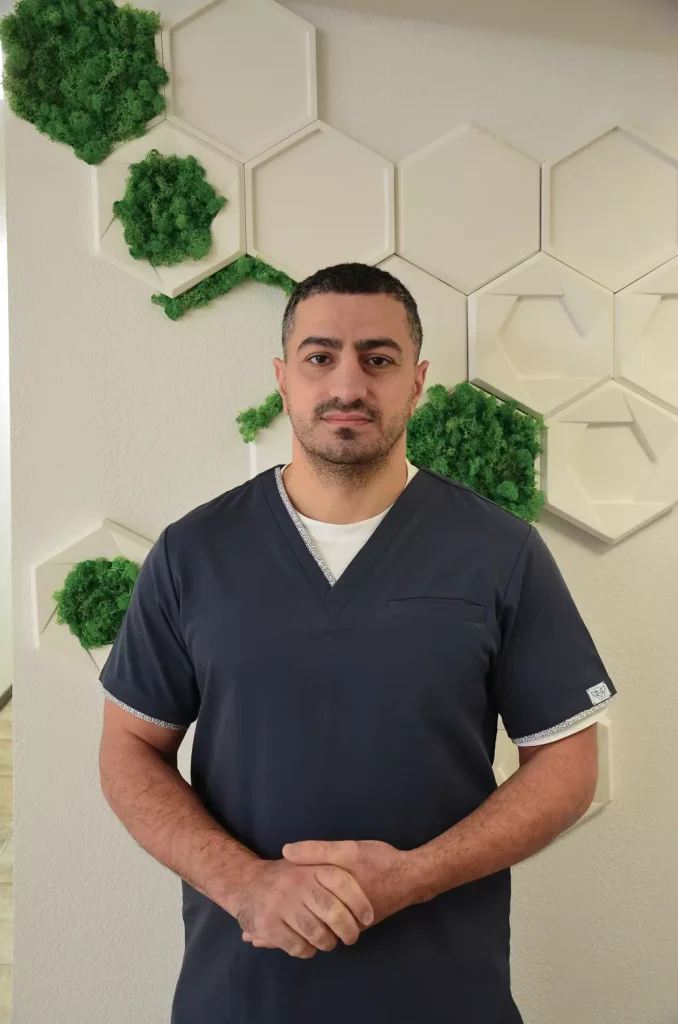
Founder of the center
Chief Rehabilitation Specialist
Chief physiotherapist
Orthopedic traumatologist
Chief rehabilitation specialist of physical therapy
Masseur
Masseur
Masseur

Leave your contacts — our specialist will contact you within 10–15 minutes to help you choose a service and answer all your questions.
Leave your contacts — our specialist will contact you within 10–15 minutes to help you choose a service and answer all your questions.