We work seven days a week from 9:00 to 20:00

Massages
Rehabilitation
Services
Consultations
We work from 9:00 to 20:00
 Skip to content
9 sessions + 1 as a gift
Wellness centers
Patients were helped
Specialists
Years of experience
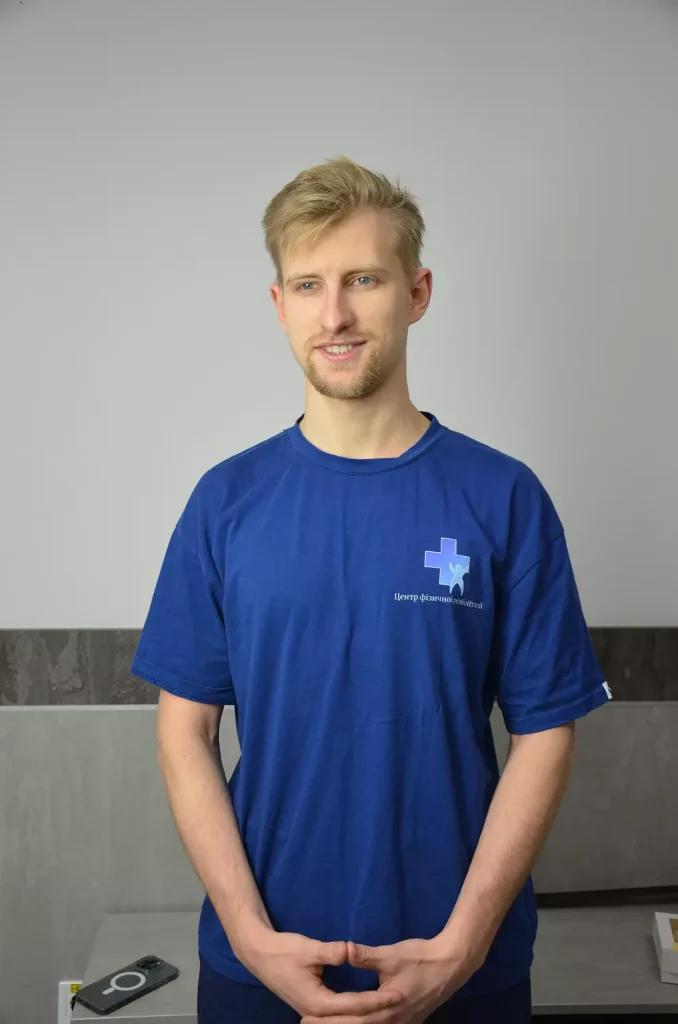
Chief rehabilitation specialist of physical therapy
A network of rehabilitation centers where knowledge is passed down from generation to generation.


We are grateful to everyone who has entrusted their health to us.
Your feedback is the best confirmation of the results of our work.
Share your impressions - they inspire us to become even better every day.
Leave your contacts — our specialist will contact you within 10–15 minutes to help you choose a service and answer all your questions.
We are always open for communication and ready to help you.
Call or email us to schedule a consultation or get detailed information.
Our experts will suggest the best solution for you.
A physical therapy doctor or physiotherapist helps restore mobility, muscle strength, coordination, gait and a safe return to exercise through properly selected exercises. At KINEZIUM, physical therapy is part of a rehabilitation approach where movement is not used haphazardly, but taking into account the diagnosis, pain, healing phase and goals of the patient. This is especially important after injuries, surgeries, fractures, back pain, joint limitations or prolonged reduced activity.
In practice, a physical therapy specialist assesses how the patient moves, which muscles are weak, where there are compensations, whether the technique is safe, and how the body responds to the load. Next, exercises are selected: first simple and controlled, then more functional. The goal is not just to “perform a complex,” but to restore the person's ability to move confidently, without overload and with a lower risk of relapse.
An exercise therapy instructor is needed when it is important for the patient not just to get a list of exercises, but to learn how to perform them correctly and safely. This is important after injuries, surgeries, fractures, back or joint pain, muscle weakness, gait disorders, balance or coordination problems. Often people try to do exercises on their own, but due to pain, fear of movement or incorrect technique, they either do not get results or overload the problem area.
Indication | How an exercise therapy instructor helps |
After a fracture | Gradually restores movement, strength, support, and function of the limb |
After surgery | Operates within the permitted range of motion and load |
Back pain | Teaches stabilization, body control, and safe movement habits |
Joint pain | Selects exercises for amplitude, strength and overload reduction |
Muscle weakness | Forms a gradual strength progression without sudden loads |
Gait disturbance | Trains support, balance, coordination and step symmetry |
Physical therapy solves problems that cannot be completely closed by passive procedures. It gradually restores the amplitude of movements, strength, endurance, balance, coordination, control of body position and the ability to perform everyday activities. If after an injury or pain a person begins to protect one side, changes his gait, does not load his arm or avoids movement, physical therapy helps to return the correct movement stereotypes.
Options for work may include mobilization exercises, isometric tension, elastic band exercises, stabilization training, balance exercises, gait control, progressive strength training, and functional movements. But the order matters: what is helpful at a later stage may be too aggressive at an early stage. Therefore, exercise therapy should be individualized, dosed, and linked to a specific functional goal.
A physical therapy session at KINEZIUM begins with an assessment of well-being: has the pain changed, is there swelling, how the patient tolerated the previous load, what was done at home. Next, the specialist checks the technique of movements, amplitude, strength, joint stability, breathing, balance and compensations. If the exercise is performed incorrectly, it is corrected or temporarily replaced.
The load is dosed according to the principle of gradualness: from simple to complex, from movement control to strength, from isolated exercise to functional action. The patient receives home recommendations, but they must be realistic and safe. A good exercise therapy session is when a person understands what exactly he is training, what sensations are acceptable, and when to stop.
A physical therapy doctor or physical therapy instructor focuses on active exercises, movement techniques, load dosage, and gradual return to function. A rehabilitation therapist plans the recovery process more broadly: assesses goals, stages, limitations, progress, and may coordinate multiple areas. A physical therapist works more with procedures and assistive techniques that can reduce pain, swelling, or prepare tissues for movement.
Criterion | Exercise therapy specialist | Rehabilitation specialist | Physiotherapist |
Basic tool | Therapeutic exercises | Comprehensive recovery program | Physiotherapy treatments and rehabilitation support |
Focus | Technique, strength, range, balance, motor control | Functional goal and progress | Tissue reaction, pain, swelling, methods of exposure |
Role in the team | Conducts active classes | Plans and adjusts the recovery route | Supplements the program with procedures |
Example of work | Learning to walk without compensation after an injury | Identify the stages of returning to walking | Choose a procedure to reduce pain or swelling |
An exercise therapist can select exercises for the back, joints, muscle strength, balance, gait, coordination, and gradual return to activity. For the back, these may include core stabilization exercises, pelvic control, soft mobility, and deep muscle endurance. For the joints, range-of-motion exercises, isometric exercises, progressive strengthening of the muscles around the joint, and functional movements.
After lower extremity injuries, support, weight bearing, knee, foot, and gait control are often added. After arm injuries, shoulder, elbow, hand, grip, and coordination exercises are added. But the specific set depends on the diagnosis and limitations: universal videos from the Internet do not take into account the healing phase, pain, surgery, comorbidities, and real-world performance techniques.
Before performing exercise therapy, it is necessary to take into account acute pain, swelling, recent injury, postoperative restrictions, joint instability, incomplete fracture union, risk of falling, neurological symptoms and cardiovascular limitations. If during the exercises there is sharp pain, dizziness, numbness, weakness, increased swelling or a feeling of instability, the session should be stopped and a specialist should be informed. Exercise therapy should not turn into an endurance test due to pain.
Exercises should be performed with particular caution after operations, endoprosthetics, fractures, ligament ruptures, and neurological disorders. In such cases, the dosage of the load is determined not only by well-being, but also by medical recommendations. If there are doubts about the safety of the exercises, a doctor or rehabilitation specialist should be consulted before active training.
After physical therapy classes, you can expect a gradual improvement in mobility, strength, movement control, gait, balance, and everyday activities. The result is not formed in one session, but through consistent repetition of correctly selected exercises and control of technique. At KINEZIUM, physical therapy can be combined with a consultation with a doctor, rehabilitation specialist, physiotherapy, or massage, if this corresponds to the patient's condition.
NCBI Bookshelf, in the article Therapeutic Exercise, describes therapeutic exercise as intended movement to correct disorders, restore musculoskeletal function, and maintain well-being: https://www.ncbi.nlm.nih.gov/books/NBK555914/. MedlinePlus notes that rehabilitation may include physical therapy for strength, mobility, and fitness: https://medlineplus.gov/rehabilitation.html. Washington University School of Medicine describes musculoskeletal rehabilitation as individual sessions with analysis of posture, movement patterns, strength, and functional activity: https://pt.wustl.edu/patient-care/service-lines/musculoskeletal-rehabilitation/. Cornell Health reminds that exercises should be performed according to the recommendations of a physical therapist, and if you experience pain or are performing them incorrectly, stop and consult a specialist: https://health.cornell.edu/services/physical-therapy-massage/pt-exercise-videos.
To make an appointment with an exercise physiologist or exercise physiologist, you need to describe your main problem: pain, injury, surgery, fracture, weakness, gait disturbance, limited movement, or desire to safely return to activity. If you have any test results, doctor's notes, or recommendations, bring them with you. This will help the specialist choose exercises according to your limitations, rather than randomly.
The initial assessment determines goals, contraindications, permissible load and starting level of exercises. Then the program is adjusted depending on progress: the amplitude is increased, strength, balance, coordination or functional movements are added. Enrollment in KINEZIUM is advisable if you need technique control and an individual approach, rather than general exercise.
Leave your contacts — our specialist will contact you within 10–15 minutes to help you choose a service and answer all your questions.
Leave your contacts - our specialist will contact you within 10-15 minutes to help with the service and answer all your questions.
Leave your contacts - our specialist will contact you within 10-15 minutes to help with the service and answer all your questions.
Leave your contacts - our specialist will contact you within 10-15 minutes to help with the service and answer all your questions.
Leave your contacts - our specialist will contact you within 10-15 minutes to help with the service and answer all your questions.