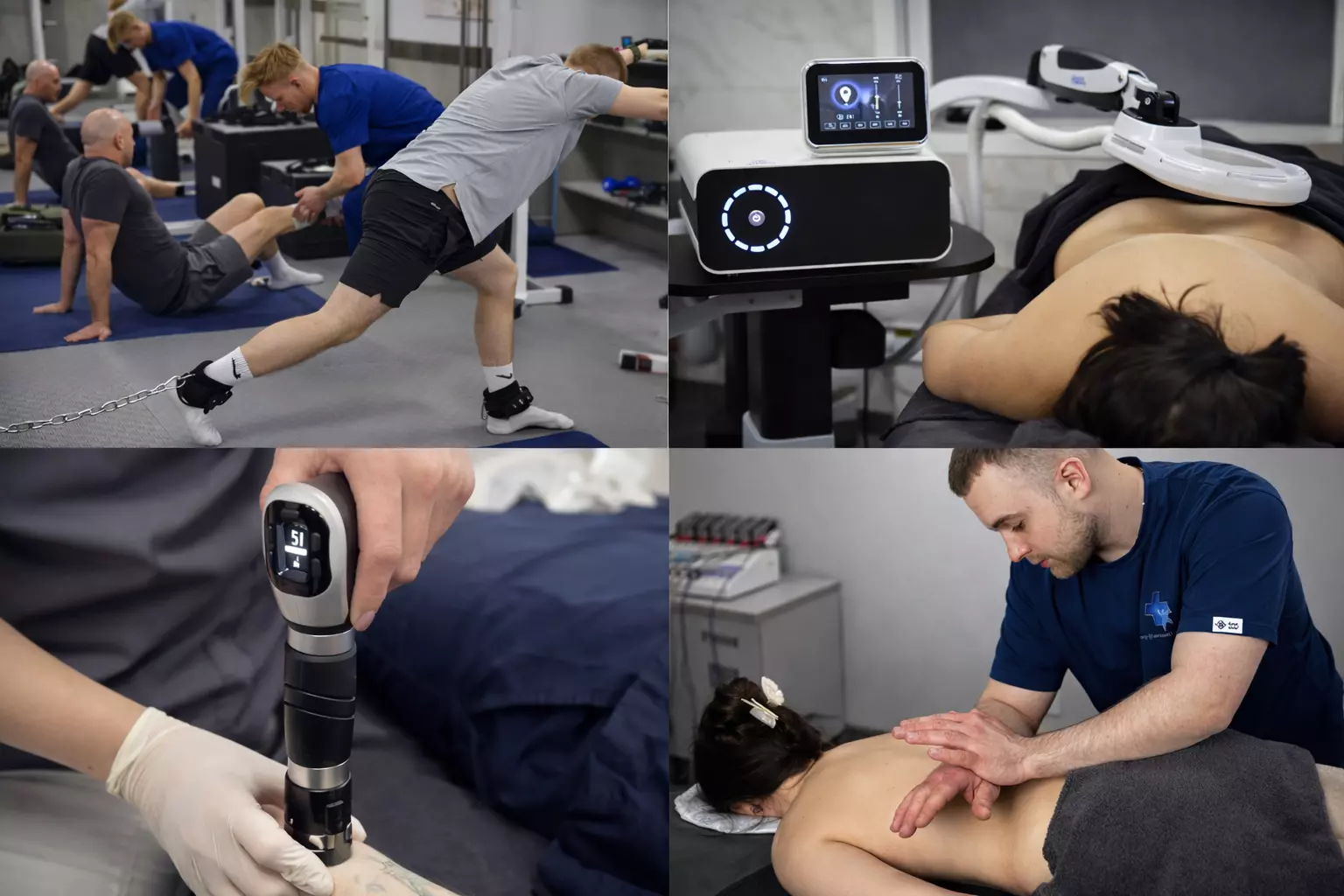
wellness centers
patients were helped
specialists
years of experience
Shockwave therapy of the knee in KINEZIUM is a physiotherapeutic method of acoustic impact on the tissues of the knee joint after assessing the condition. SCT can be considered for local pain, tendon overload, discomfort in soft tissues or as an auxiliary element of complex rehabilitation. The procedure is not prescribed only based on the phrase “the knee hurts”: first you need to understand the source of pain, the presence of edema, stability, tolerance of movement, contraindications and the goal of treatment. In KINEZIUM, SCT of the knee can be combined with exercise therapy, physiotherapy, load control and home recommendations. It is not a replacement for exercises and is not a universal method for all knee conditions.
Knee pain can be caused by tendon overuse, sports injuries, chronic soft tissue irritation, joint changes, trauma, or improper return to activity. TKA is more often considered for localized tissue areas rather than for acute injuries with significant swelling or instability.
Reason | How can this manifest itself? |
Tendon overload | Local pain near the patella, tendons, or attachment sites |
Sports and repetitive loads | Pain after running, jumping, squatting, or changing training volume |
Chronic discomfort | The pain lasts longer than expected and recurs with exertion |
After a knee injury | Local pain may remain, but instability and acute conditions must first be ruled out. |
Arthritic changes | Pain and stiffness may require a comprehensive approach, not just a procedure |
Muscle imbalance | The knee is overloaded due to weakness in the hip, gluteal muscles, or foot |
Before performing UCT, it is important to assess the severity of the condition, whether there is swelling, whether the leg can be put on weight, and whether there are any contraindications. In acute injuries with severe pain or instability, the procedure may not be appropriate until the diagnosis is clarified.
Status level | Typical manifestations | Tactics before the procedure |
Mild local discomfort | Pain only with certain exertion, no swelling | Zone assessment, UHT dosage, parallel exercises and load control |
Chronic overload | The pain recurs for weeks or months | A comprehensive program is needed: UHT + exercise therapy + load change |
Pain with swelling | Knee is enlarged, flexion is limited | First, a medical evaluation of the cause of the swelling |
Acute trauma | Sharp pain, instability, inability to support | UHT is not the first step, diagnostics are needed |
Postoperative condition | There is a scar, a surgeon's protocol, and restrictions on weight bearing. | The procedure is considered only after permission and evaluation by a specialist. |
If knee pain is ignored, the body often begins to compensate for the load in other areas: gait changes, overloading the other knee, hip, foot or lower back. With tendon overload without correction of the load, the pain can become chronic, and returning to sports is more difficult. In an injury without evaluation, instability, a tear or a condition that requires different treatment can be missed.
Possible consequences:
UHT can be a useful adjunctive method, but without addressing the cause of the overload, the result will often be unstable.
Knee ECT may be appropriate for knee pain, tendon overload, local discomfort, limited range of motion, and rehabilitation goals after assessment. The procedure may be appropriate when the pain is localized to the tissue and there is no acute inflammation, thrombotic risk, infection, or other contraindications. If the knee is markedly swollen, hot, unstable, or painful after a recent injury, a doctor should be consulted first.
Situation | When UHT may be considered |
Local pain in the tendon area | After assessing the area of pain and ruling out acute injury |
Chronic overload | As an auxiliary method together with exercise therapy and load correction |
Pain after sports | If there is a local tissue problem without acute injury |
Preparing for more active rehabilitation | When you need to reduce discomfort for better movement tolerance |
Condition with arthritic changes | Only as part of a comprehensive plan, with no promise of curing the joint |
After a preliminary assessment by a specialist | When the indications, risks, and expected course are understood |
Shockwave therapy for the knee can be helpful in reducing pain, working with tissues, and improving range of motion and load. It is not used as an isolated “knee treatment,” but rather as part of a program that includes load control, hip and shin exercises, gait training, or sports. Shockwave therapy may be particularly appropriate for localized tendon or soft tissue areas if there are no contraindications. The effect depends on the diagnosis, procedure parameters, number of sessions, and whether the cause of the overload is eliminated. If the patient returns to the same overload after the procedure, symptoms may recur.
During UHT, tendon areas, the anterior surface of the knee, areas of local pain and adjacent soft tissues can be treated according to indications. The area is determined after examination, palpation, analysis of the patient's movements and complaints. Do not work thoughtlessly on the entire joint or on areas where there is acute swelling, signs of infection, thrombosis risks, tumor processes or other contraindications. If the pain is deep, the knee is blocked or there is instability, diagnostics are required first. UHT should be a pinpoint and justified procedure.
UHT of the knee at the KINEZIUM center in Kyiv begins with a consultation, clarification of complaints, selection of the zone and checking for contraindications. The specialist assesses pain, swelling, mobility, load tolerance, history of injuries and previous examinations. During the procedure, a gel is applied to the skin, the intensity is adjusted and acoustic effects are performed on the specified area. The sensations may be moderately unpleasant, but should not be unbearable. After the session, the patient receives recommendations on load, exercises and subsequent procedures.
UHT of the knee differs from exercise therapy and general physiotherapy in the mechanism of action and role in the recovery plan. UHT is an acoustic effect on a specific area, exercise therapy is an active restoration of strength, mobility and control, and physiotherapy can include various hardware techniques. For most knee conditions, the most stable result is not provided by one method, but by a combination of procedures and active rehabilitation.
Method | Main role | What is important to understand |
UHT knee | Acoustic effects on local pain or tissue areas | Does not replace exercise and load adjustment |
Exercise therapy | Restoring strength, range of motion, balance, and movement control | Is the basis for a functional return to activity |
Physiotherapy | Supportive work with pain, tissues and stress response | The method is selected based on indications and contraindications. |
Gait training | Returning to proper footing and stride | Important after injuries, surgeries and lameness |
Comprehensive plan | A combination of procedures, exercises and home recommendations | Best meets the patient's commercial and informational request |
Before shock wave therapy of the knee, it is necessary to take into account blood clotting disorders, taking anticoagulants, acute infections, thrombosis, oncological risks, pregnancy, growth zones in children, open wounds, severe acute swelling, severe pain after a recent injury and joint instability. If the cause of the pain is unclear, the procedure should not be started without an evaluation. Caution is also required after recent surgery and if there are implants in the affected area.
A PubMed Central systematic review on shockwave therapy for knee osteoarthritis shows that ESWT is being studied as a non-invasive method, but the results depend on the parameters and condition of the patients: https://pmc.ncbi.nlm.nih.gov/articles/PMC11096685/. Another review on ESWT for knee osteoarthritis highlights the potential of the method for pain reduction, but the need for proper protocol selection: https://pmc.ncbi.nlm.nih.gov/articles/PMC7670564/. The AAOS Knee Conditioning Program reminds us that after knee injury or surgery, exercises help to return to daily activities and reduce stress on the joint by strengthening the muscles: https://orthoinfo.aaos.org/en/recovery/knee-conditioning-program/. Practical conclusion: UHT only makes sense when it is safe and included in the recovery plan.
After UHT of the knee in KINEZIUM, you can expect a gradual decrease in discomfort, improvement in movement tolerance, and the result depends on the diagnosis and course. The effect does not always appear after one session, and in chronic conditions, a combination with exercise therapy, load control, and a change in training regimen is often required. UHT does not guarantee the same result for everyone, especially if there is arthrosis, instability, overweight, severe swelling, or structural injury.
A 2024 PubMed Central review of shockwave therapy for knee osteoarthritis reports the effectiveness of ESWT in reducing symptoms, but also emphasizes the importance of energy, number of pulses, and protocol: https://pmc.ncbi.nlm.nih.gov/articles/PMC11096685/. A dose-dependent meta-analysis of ESWT for knee osteoarthritis shows that exposure parameters can influence clinical outcome: https://pmc.ncbi.nlm.nih.gov/articles/PMC10904159/. The AAOS Knee Conditioning Program emphasizes the role of strengthening the muscles that support the knee: https://orthoinfo.aaos.org/en/recovery/knee-conditioning-program/. Practical conclusion: UHT can be a useful element, but a stable result requires active rehabilitation.
To sign up for shock wave therapy of the knee, you need to contact KINEZIUM and describe where exactly it hurts, how long ago, whether there was an injury, surgery, swelling, instability or examination. The specialist will assess the condition, check for contraindications and determine whether SCT is suitable for your case. If the procedure is appropriate, the area, intensity, number of sessions and recommendations for load are selected. If there is acute swelling, inability to support, knee locking or suspicion of a rupture, a medical diagnosis is first required. It is better to plan an appointment not only for the procedure, but for a clear plan for knee recovery.
Our team consists of experienced rehabilitation specialists, physiotherapists, and massage therapists who help people restore their health and return to an active life every day.
We combine modern techniques, an individual approach, and sincere care for each patient.

Chief Rehabilitation Specialist

Chief physiotherapist
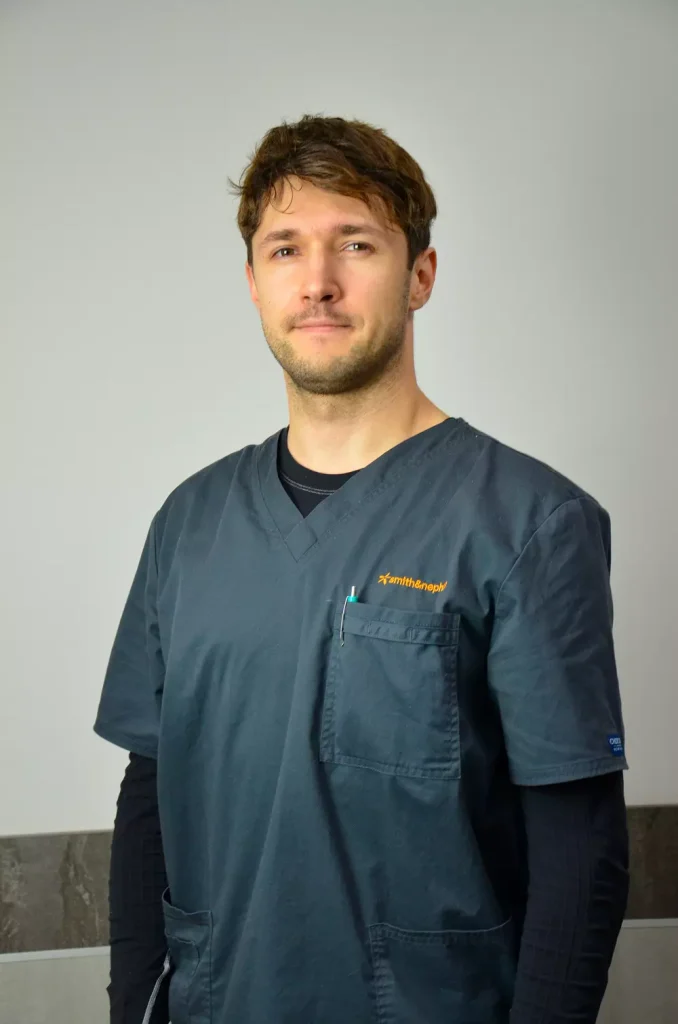
Orthopedic traumatologist
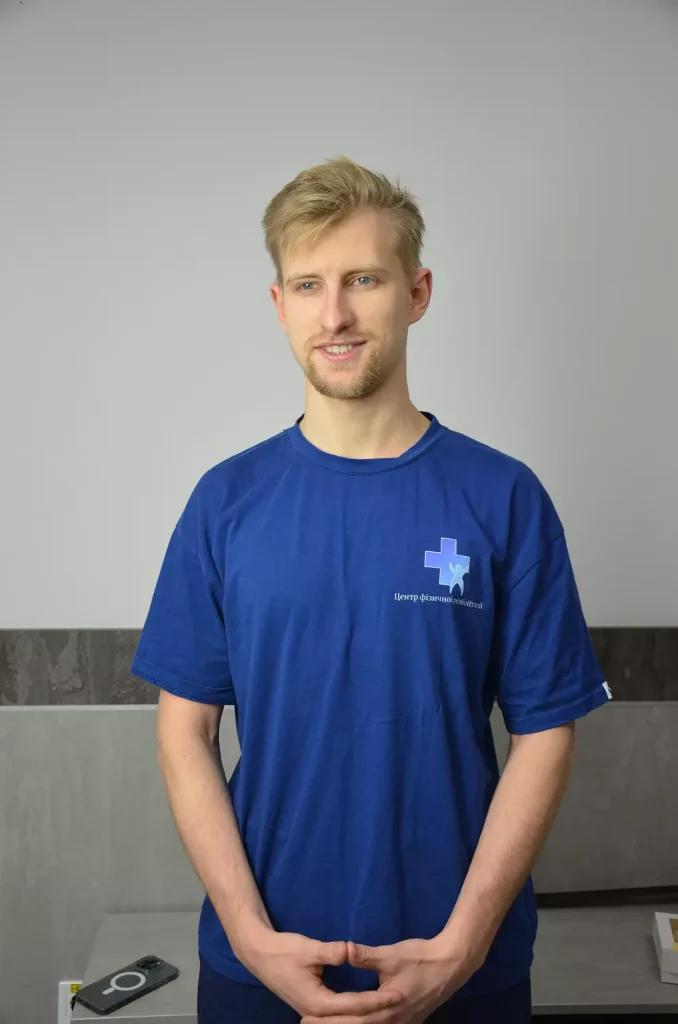
Chief rehabilitation specialist of physical therapy

Rehabilitation specialist
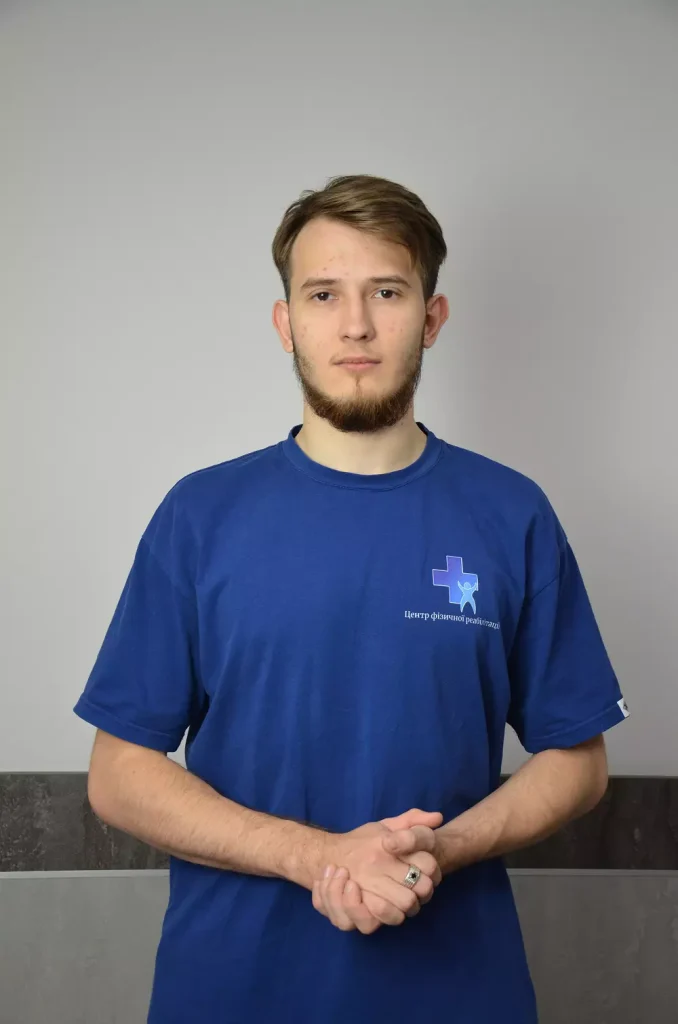
Rehabilitation specialist

Masseur

Masseur
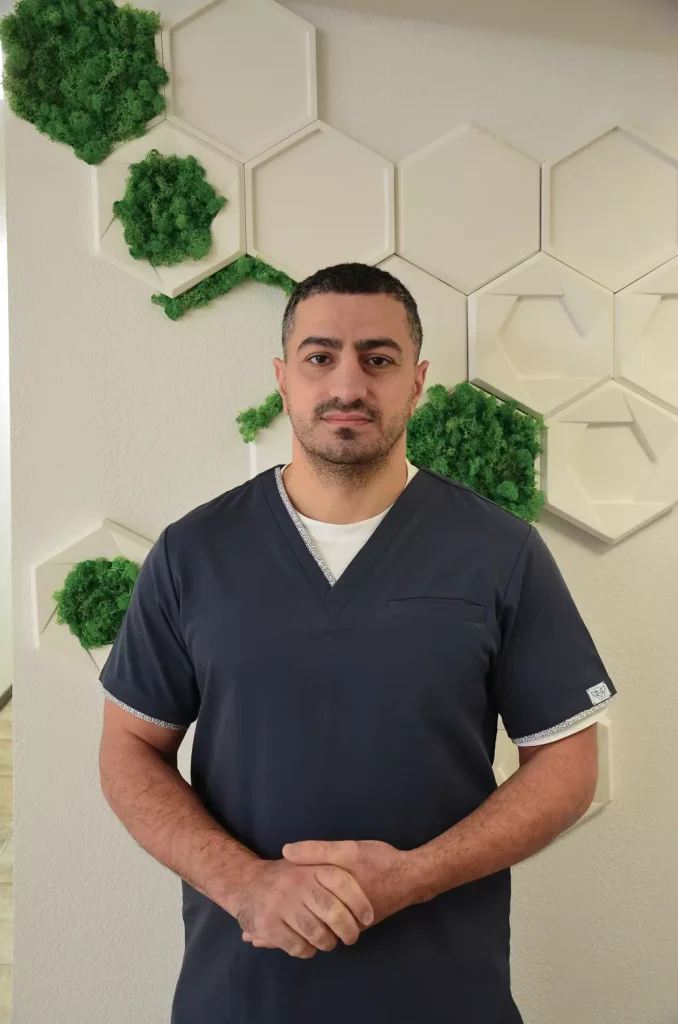
Founder of the center
Chief Rehabilitation Specialist
Chief physiotherapist
Orthopedic traumatologist
Chief rehabilitation specialist of physical therapy
Masseur
Masseur
Masseur

Leave your contacts — our specialist will contact you within 10–15 minutes to help you choose a service and answer all your questions.
Leave your contacts — our specialist will contact you within 10–15 minutes to help you choose a service and answer all your questions.